The Longest Summer Ever: My first attempt at retirement

I keep telling people I’m “retired,” but honestly? It still feels exactly like summer break. Just… longer. As in, the longest summer ever.
You’d think after decades in education, my body would know the difference between “July freedom” and “you actually don’t have to go back in August.”
But no.
Every morning I wake up expecting that telltale flutter in my chest… the quiet mental checklist of meetings, walkthroughs, agendas, and responsibilities.

Instead, nothing. Just the soft, strange realization:
Oh. Right. This is my first attempt at retirement.

My Endless Summer?!

Summer That Never Ends

Let me be clear: I’m not complaining.
There are parts of this “forever summer” that I am embracing with full, unapologetic enthusiasm:

  • No alarm clock.
  • No makeup.
  • No “professional clothes” (whatever those were… I’ve fully forgotten).
  • An alarming number of weekday PJ days… a freedom I never knew I needed.

But there’s also this odd internal clock that refuses to reset.
After a lifetime of school-year cycles, my brain keeps insisting,
Any day now… we go back.

Except we don’t.
Not this time.

My Secret: I Haven’t Really Left School

Which brings me to my confession:
I cannot stay off LinkedIn.

I scroll through it like a retired detective scrolling old case files, muttering, “Ah, yes, I remember that initiative…”

I feel like a Peeping Tom in the international-school community, quietly watching from the bushes while everyone shares learning highlights, leadership reflections, new jobs, updated titles, conference photos, PD takeaways, mentoring moments.

Everyone else is in the proverbial “staff room,” buzzing with the energy of a new academic year.
And I’m standing outside the window like,
“Oh wow, look at that inquiry-based learning celebration! Good for them!”

I’m not in it anymore, but goodness, I still love it. And I can’t seem to walk away from it completely, or even partially.

Where would I be without #tieonline?

Lost-ish, but Fine-ish

So how’s retirement going?
Honestly: a mixed bag.

Some days, I feel unmoored, like I left the dock but forgot to bring the paddles.
There’s no calendar telling me where to be, what to do, or who needs me.

And as silly as it sounds, that can feel a little… lonely.
Or aimless.
Or like I’m waiting for school to start again after a really, really long July.

But then there are the other days… the ones when I think,
“Oh wow, this is actually lovely.”
When the coffee tastes better than it ever did at 6:00 a.m.
When the day unfurls slowly.
When I remember that the whole point of this “longest summer ever” is to rest, reset, rethink.

And, maybe most importantly, to just be.

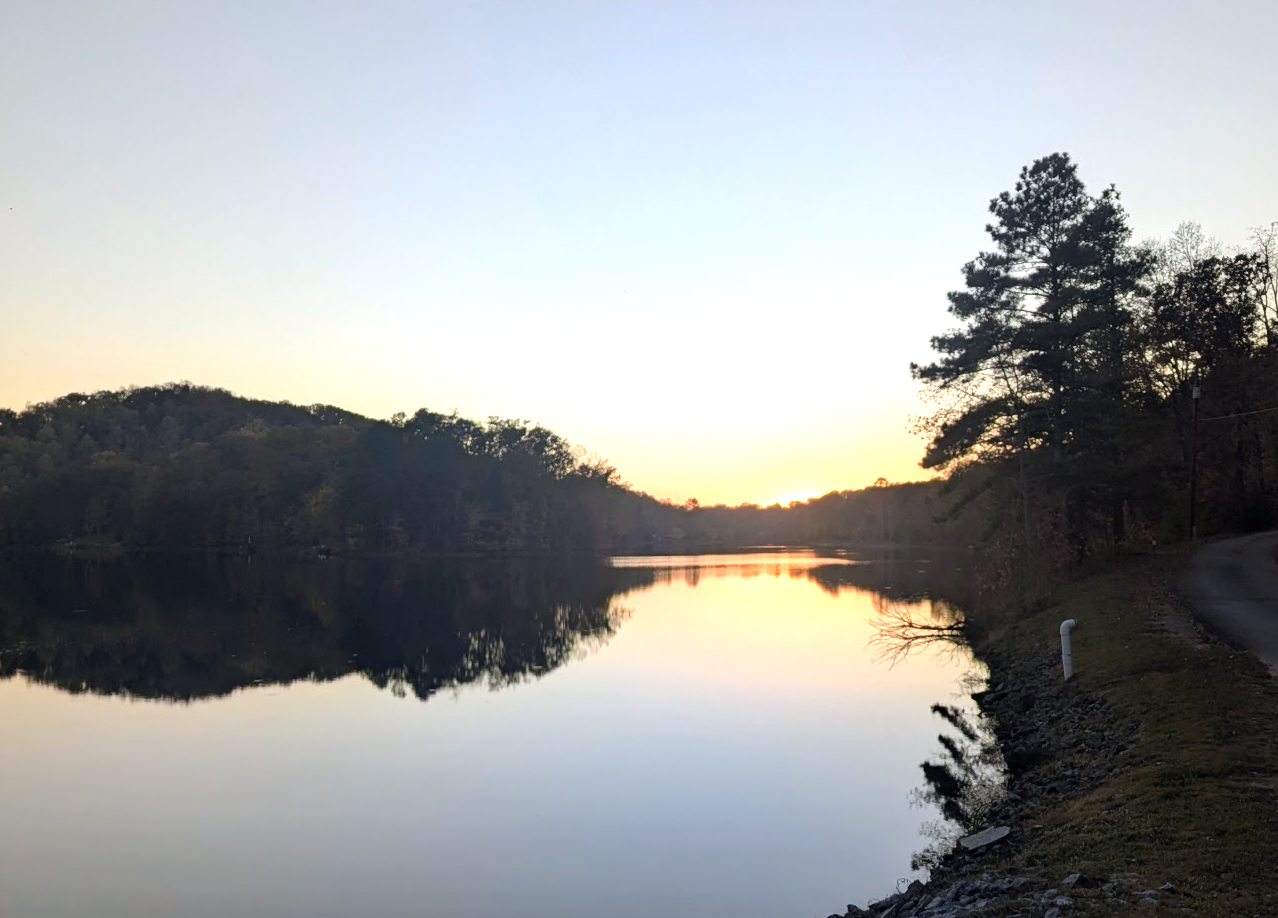
Laurel Lake (TN) sunset walk

Retirement or Rewirement?

Part of me wonders whether I’m even doing retirement right.
Is it supposed to feel like this?
Is there a handbook? (And if so, does it come with rubrics?)

But maybe this is what a first attempt is supposed to be:
a gentle, sometimes awkward experiment in re-learning yourself outside of job titles and school-year rhythms.

Maybe this “longest summer ever” is the season I needed without ever knowing it –
a season to soften, slow down, and wander a little.
A season to unlearn urgency.
To rethink purpose.
To rediscover curiosity without having to turn it into a workshop, slide deck, or strategic plan.


For Now, I’m Letting Summer Last

I don’t know what comes next.
I don’t even know how long this first attempt at retirement will last.
Knowing me, I might press “rewind” and jump back into something new before long.

But for now?
I’m living inside the longest summer ever… pajamas, coffee, LinkedIn lurking, and all.

And maybe that’s not just okay.
Maybe it’s exactly right.

From Mountain Trails to Savannah Paths: Lessons in Learning and Leading

The landscapes may change, but the heart of learning stays the same.

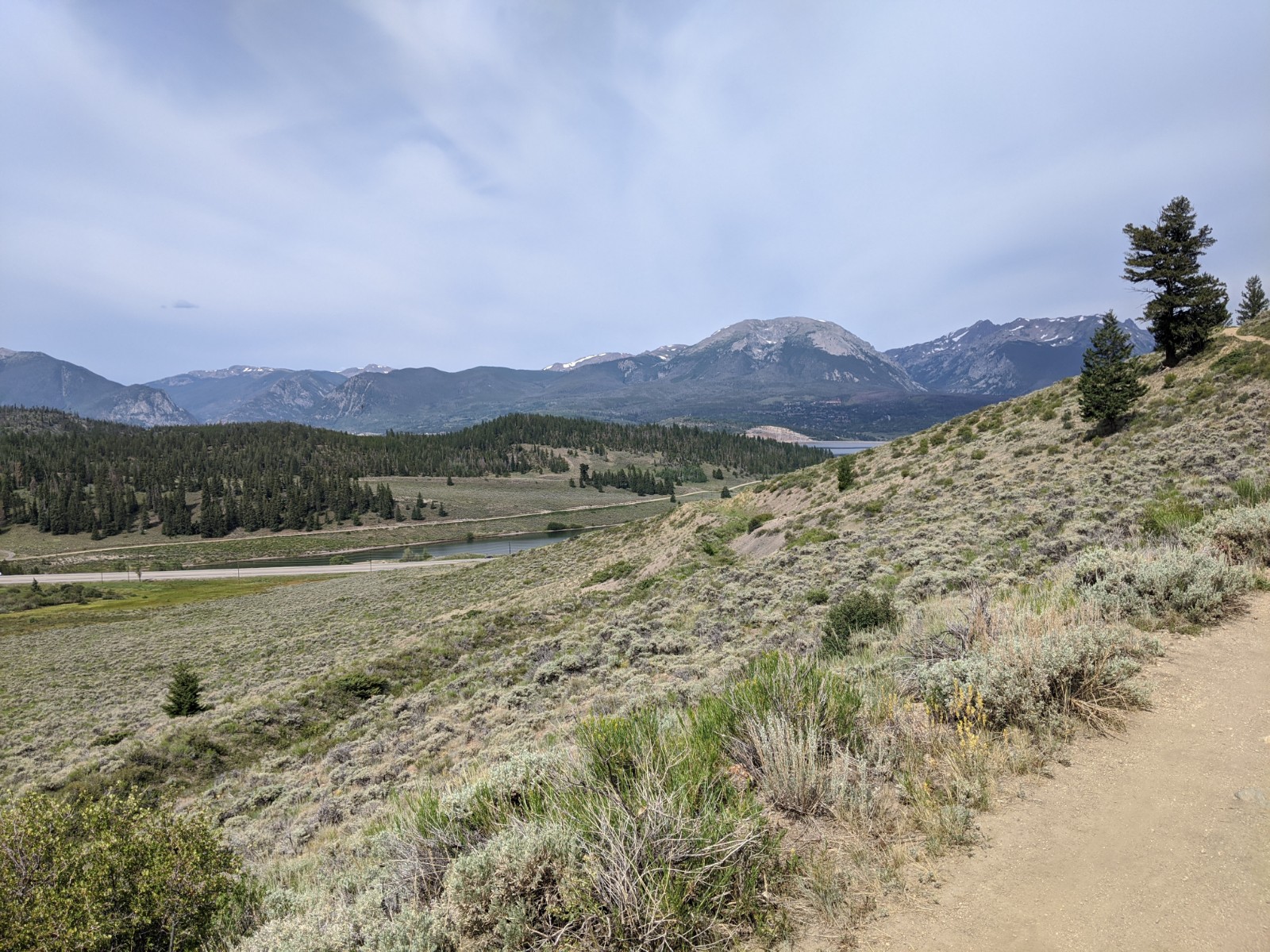
In my earlier blog, Insight from a Hike: A Story About a Personal Journey and a Metaphor About Learning (March 2020), I shared how hiking in the Colorado Rockies became more than just a physical activity for me, it became a metaphor for learning and personal growth. I started with familiar trails, set small goals, took breaks when I needed to, and celebrated the little victories along the way. Every hike taught me something about perseverance, self-awareness, and the importance of setting a pace that fits the journey you’re on.
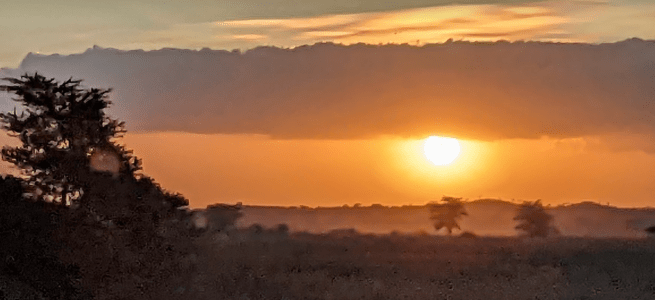
Now, my path has led me from the structured trails of Colorado to the open savannahs of Kenya. Here, the landscape is vast, unpredictable, and full of unknowns… much like the journey of lifelong learning. On safari, there aren’t many marked trails or clear signposts. You have to rely on observation, intuition, and adaptability to find your way.

When I think about learning… real, deep learning… I keep coming back to the lessons I’ve picked up outdoors. Whether it’s a slow hike up a mountain or a wide-open safari, the patterns are the same: uncertainty, observation, and collaboration. These experiences remind me that the way we move through the world is the way we learn, and that’s exactly what the ISK Big 5 capture. I’m proud of how our community has embraced this shift. We’re not just talking about skills in the abstract anymore; we’re starting to really see the Big 5 alive in our learning, in our behavior, and in the way we show up for each other, both inside and outside the classroom.

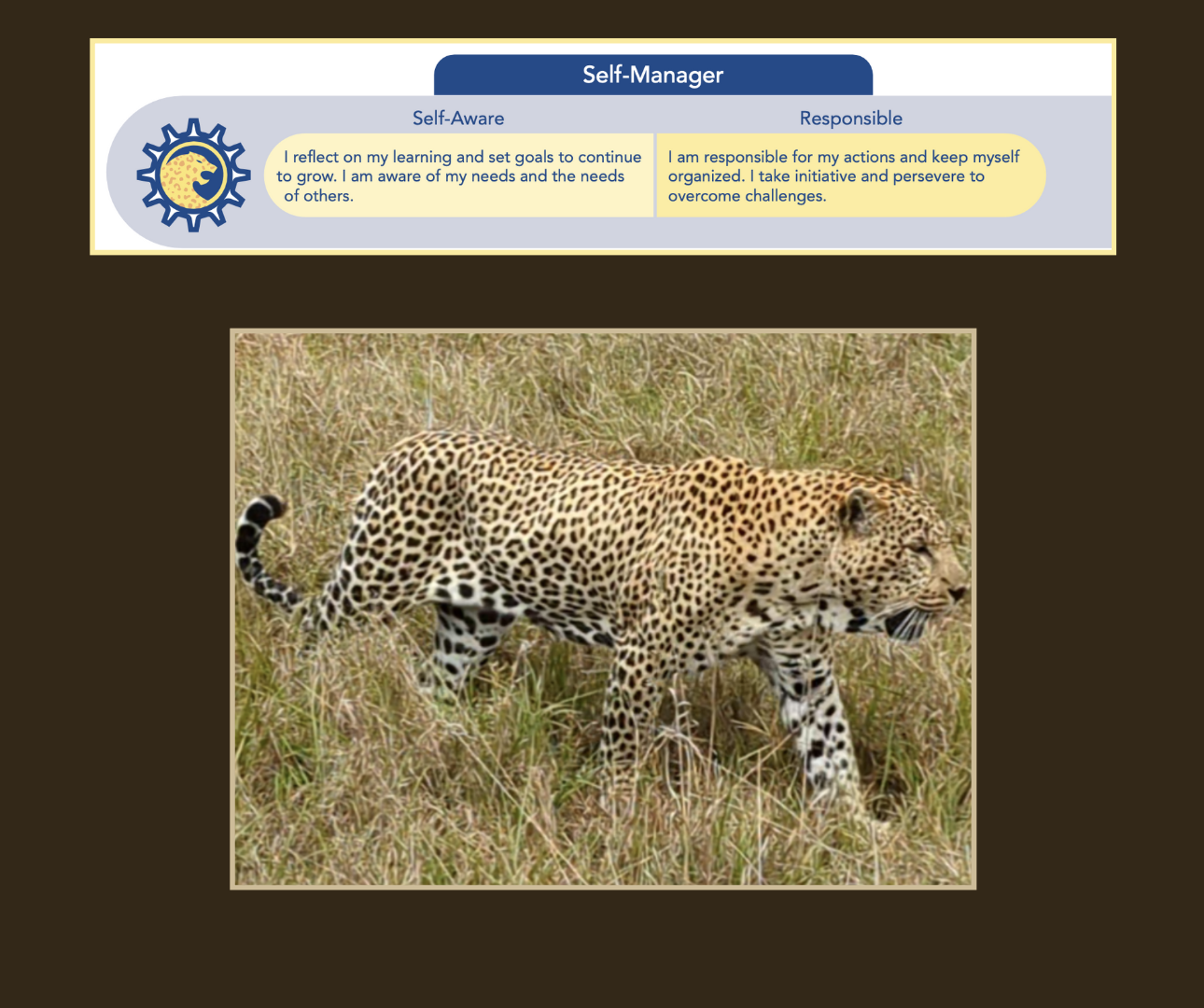
On a well-marked trail, it’s easy to feel confident; the next step is obvious. But on the savannah, the path isn’t always laid out for you. You have to navigate through uncertainty, trust your instincts, and adjust along the way. Learning works the same way. It’s rarely a straight line. Being a strong Self-Manager means staying grounded even when things feel unclear. It’s about knowing what you need, being responsible for keeping yourself moving forward, and finding the resilience to push through when you might feel a little lost. Growth happens when we stop waiting for certainty and just start walking.

On safari, your success often depends on what you notice… the flick of an ear, a shift in the wind, the stillness that wasn’t there a second ago. Learning asks the same of us. As Thinkers, we have to stay curious, ask the kinds of questions that open new possibilities, and reflect on what’s right in front of us. Sometimes the biggest insights don’t come from the loud and obvious; they come from the small details we take the time to notice. Good learning, like good exploring, starts with paying attention.

And nobody goes on safari alone. You lean on your guide’s experience, the sharp eyes of your fellow travelers, the quiet teamwork of a group tuned into the same goal. Learning thrives the same way- through connection. Being a Communicator means listening deeply and sharing ideas in ways that bring people in, knowing that what we say and how we say it matters. Being a Collaborator means building on each other’s strengths, asking good questions, and sometimes compromising so we can move forward together. Exploration, whether it’s across the savannah, in a classroom, or in a big life transition, always gets richer when we’re willing to see through more than just our own eyes.

At the heart of all of this is a mindset that goes beyond managing ourselves, thinking critically, or working together. It’s about what we choose to do with all of that learning. Being a Changemaker means using what we know to make a positive difference… not just for ourselves, but for the communities and the world around us. It means investigating the world, recognizing different perspectives, and taking action with care and purpose. Whether we’re hiking a trail, stepping into a new chapter, or coaching others along their own paths, the real impact comes when we decide to leave things better than we found them.

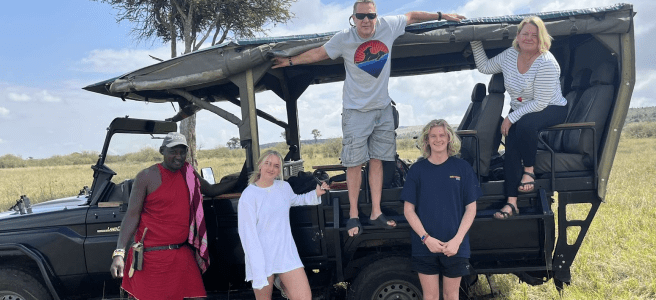
Although I might enjoy the solitude of a mountain hike, a safari is impossible to do alone. You rely on others… their eyes, their instincts, their energy. When I think back on the safaris I’ve been lucky enough to share, it’s the people that stand out. I learned the importance of patience, how you can sit for what feels like forever, just watching for the slightest flicker of movement deep in the bush. I listened to stories of past adventures that made the experience even richer. I saw a real hunger to learn, not just about the animals, but about the environment, the people, and the bigger picture. I watched how often conversations turned to wondering: How can we show up in ways that help, without letting our privilege get in the way? And through it all, what stood out most was the sense of gratitude and humility. Being out there reminds you how small you are — and how much bigger the world is when you take the time to really see it. That’s what the Big 5 are about too. It’s not just about learning for yourself; it’s about learning alongside others and using what you know to make a difference.

In the end, it’s not about reaching a destination. It’s about learning how to walk, how to notice, how to listen… and how to leave something better behind.

Insight from a hike: A story about a personal journey and a metaphor about learning

IMG_20200722_141102

The Background

I found a new hobby this summer: hiking. Even though I have spent the last 8 summers at our home in the Rocky Mountains, I never really wanted to walk up and down steep mountains for fun. However, I needed to find my fitness again; it’s been a while since I was regularly active. My husband, Shane, offered to hike with me at first. I said no. I wanted to do this on my own. I needed to do this on my own. I started slow and easy. I took breaks as often as I needed. I didn’t challenge myself too far; I stayed on familiar trails and terrain. It was my church and my meditation time. It was quiet. 

After a few weeks, I could tell I was ready for something new and challenging. I was also ready for a partner to help challenge me, lead me, invite me to set our pace, try new trails. It was on one of these hikes, with Shane, that I started to relate our journey to what I was thinking about learning. Today, though, I took to the trail alone. I hope I never look back.

The Hike

As the sun shone through my bedroom window this morning, I stretched and started wondering, 

Where will I go today? What am I up for? A short hike or a long hike? A challenging trail with rough, steep terrain or a meandering switchback through the sagebrush? Where will I go today?

I was excited to see what I could accomplish in the next few hours.

I chose a 4.5-mile moderate hike (95 minutes) with plenty of flat space for light jogging- this is where I am trying to challenge myself. I’ve done it once before but going the opposite way. I chose a solo journey today. I wanted to wrap my head around this new thinking about learning on my own. Shane isn’t quite as geeky about learning as I am (especially during summer vacation). 

I first read the trailhead marker. I like to know where I am and where I am going. I started slowly to warm up my legs, my lungs, my brain. I picked up my pace as the trail became less rocky, smoother, more level. Then I started jogging. At the point that I knew the trail was beginning to incline and I would have to slow down, I chose a landmark that would be my “finish line” for jogging. I had to make it to that landmark, though. That was my short goal. I celebrated by looking back toward what I had just accomplished and looked at the scenery around me. 

IMG_20200722_102114

As I continued the hike up, I recognized the moment I needed a break. I had been moving along at a good pace for quite some time, but I wasn’t challenging myself as much as I could be. I needed to stop, refresh my body, redirect my brain, breathe, and set a new short goal. I will jog to that group of trees up there in the distance. I can do this. My stamina and grit are back.

Once I made it to my next “finish line” I noticed something ahead. A pile of bones. 

What type of animal bones are these? What killed this animal? How long have these bones been here? What other animals live in these mountains? Are they watching me right now?  

So many questions. I was excited to do some research and find out some of the answers to my questions. 

I also noticed life around me. Flowers beside the trail. How did these get here? There weren’t any other flowers nearby. Look at how different they are; how beautiful they are.

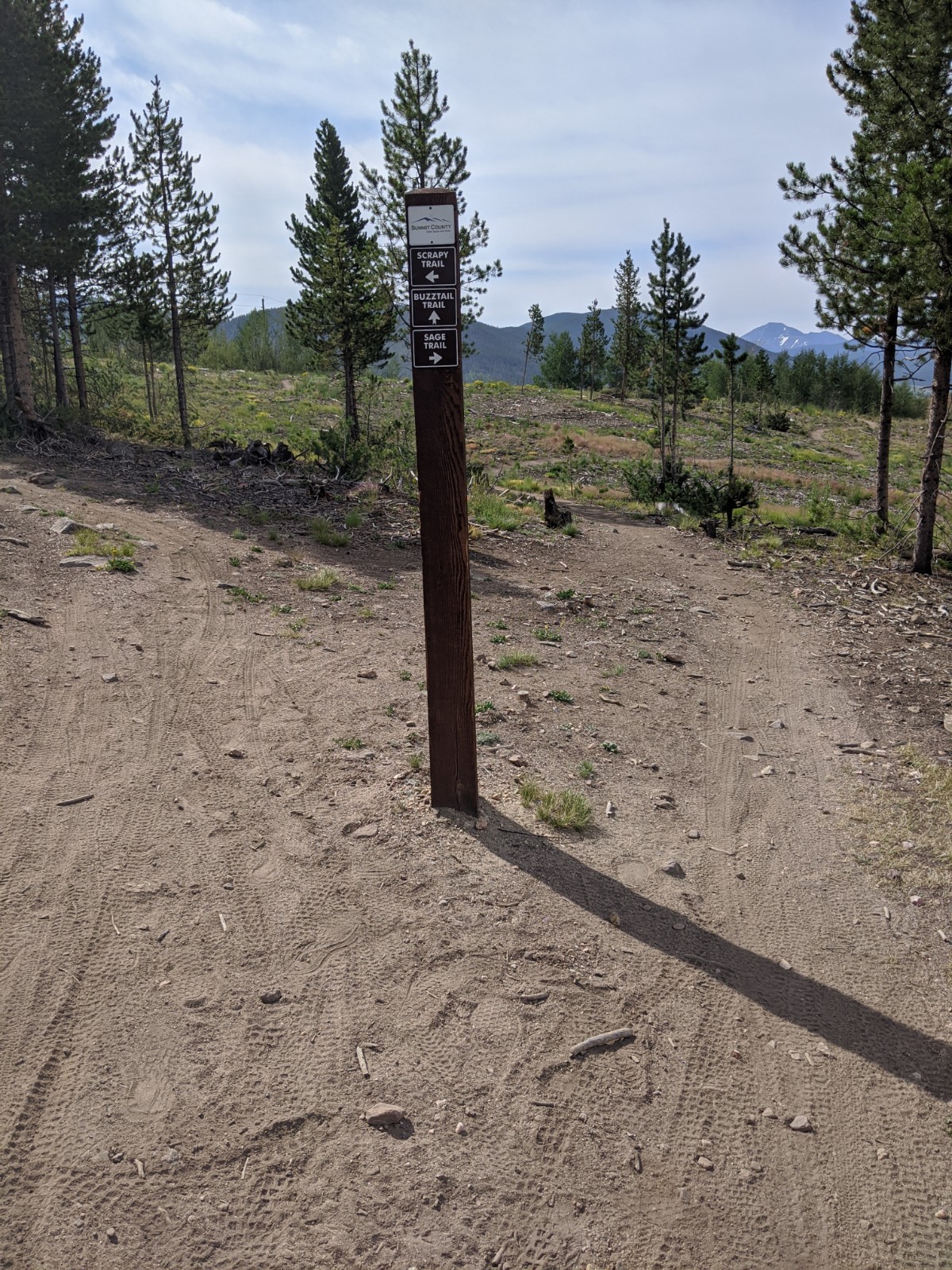
A crossroads is ahead. Three trails to choose from. Which way shall I go? It is my choice; and I know that each choice will get me to my final destination. Having this choice is empowering and exciting.

IMG_20200722_095835

The journey to the top is worth it. I struggled to get up here, but look where I ended up. If I hadn’t challenged myself, I wouldn’t have seen this. The hardest part is over. As they say, it’s all downhill from here.

IMG_20200722_104527

Even though the hardest part is over, my journey back down the trail must still be my best effort. I still set short goals. I still kept my heart rate up. I did not get lazy. I reminded myself of all I learned and what was worth remembering. I revised my thinking for my next hike. 

My celebration came when I crossed my final finish line. There was someone waiting for me. They were proud of my effort.

How’d you do? How’d it feel? What was the best part? What was most challenging? What are you thinking for your next journey?

From the Trail to the Classroom

How can you use the hiking experience to focus on essential learning and skills, motivate students, and keep them on the right path of essential learning?

The hiking experience in 7 easy steps

  1. Set the trail: where are you going and how are you getting there?
  2. Choose a solo or partner journey: some people need a buddy. Someone to mix the social and academic aspects together. Someone to lead the way. Someone to challenge them. Someone who will slow them down when needed. Some people need to “go it alone.” Sometimes we might change our minds in the middle of our journey and wish we had chosen differently. 
  3. Set short goals along the way: to keep motivation high and continue to move forward. Small wins get you to a huge victory!
  4. Take useful breaks: Use this time to recharge, reset, redirect. Then get back at it!
  5. Be curious along the way: What do you notice and wonder as you move toward your goal? What new learning are you thinking about? What did you learn that you didn’t know before?
  6. Don’t ease up on the downhill: The hardest part may be behind you, but you aren’t at the finish line yet. Keep giving your best effort.
  7. Celebrate the journey: Have a “cheerleader” meet you at the end. Reflect and be proud of this hard work. Plan for your next journey.

IMG_20200717_103635

We have a moment, right now, to take a break and reset our thinking about learning. What is really important for students to know and be able to do? How will you be their guide during this year’s journey? What choices will students get to make about their path? What questions will they get to ask and answer that will take them further, deeper into the forest of understanding? How will you get students excited to wake up in the morning as wonder…

“Where will I go today?”

How about a Round of Empathy: In 2 Parts

Part 2: Empathy for Seniors

Background: My husband is a high school Social Studies teacher. I am a Curriculum Coordinator at the same school. We have 2 high school children (a sophomore and a senior), who attend this school. 

I’m thinking that this post is for teachers and parents of the Senior Class of 2020. I can only give the view of my senior and what I am noticing but I am sure that others can relate and surely have more to add. 

Tradition… Interrupted

There is a tradition at this school. Seniors write long letters, by hand, on their graduation cards to their friends, parents of their friends, and most loved teachers. They start writing these letters as soon as the grad cards arrive. Some write as many as 40 or more. Except for this year. The cards are sequestered in the high school office. The campus is closed to families for the remainder of the year. The school is figuring out how to get everything to the seniors.

This is one of many traditions at our school, but this is the one most affecting our senior. It is getting in the way of everything else. It is consuming his days and nights. Who can think about AP Environment Science or Calculus or English at a time like this? These letters must be written, revised, and written again on these special cards in the neatest smallest handwriting ever! Except for this year. Our senior is making his own cards out of cardstock he borrowed from my office. He is putting a lot of consideration into the design of the front AND back of the cards as well as what is going to be personally written in each one. 

This is one reason that schoolwork is being put on the back burner. I have to let it go and let him come to grips with what he is prioritizing right now.

A Case of the What-Ifs

Our senior has known since November where he was going for university. It was his only choice. We visited last summer on a college tour and he knew immediately that Western Colorado University was the school for him. The campus is lovely. The people we met were his kind of people. It felt like a community and reminded him of everything he loved about his high school community.

Western

Last month, he chose a roommate and they speak most days. They are getting to know each other, their histories, and their hopes as college students. 

As the days have passed, though, the What-Ifs have started creeping into our senior’s daily thoughts.

what if

What if we can’t move into our dorm in August? Where will I live? What will I do?

What if I have to live at home by myself? I’ll need a license. I’ll need a car. I’ll need a job. I’ll need to learn how to care for a house and myself. Should I get a roommate?

What if my family can’t travel home for Christmas because COVID is still around? I won’t see them for almost a year. I don’t have any other family nearby. I might not be able to travel east to see grandparents, aunts, uncles, and cousins. I might be alone for a long time.

What if I can’t do it? I can’t be that kid who still lives with Mom and Dad. You know, the one who graduated but still hangs out with the high school kids. 

What if? What if? What if? What if? What if? What if?

This is another reason that schoolwork is being put on the back burner. I have to support him, his worries, his reality, and let him come to grips with what he is prioritizing right now.

There’s No Cap on Empathy, Right?

Are his classes important? Yes. Is this experience showing us whether or not he can be a successful independent learner or a responsible adult? At first, I would have said yes. I no longer believe that this experience is actually telling us anything about who our kids are as independent learners or responsible humans any more than it’s telling us where we fall on the continuum of perfect parents or amazing teachers. We are all just trying to survive.

What IS important right now?

Loving our children. Loving our students. Showing grace. 

I have received a few emails from teachers over the last few weeks about our senior’s missing assignments or projects. I am so impressed with the care they have shown; the patience they have. I have so much empathy for all of these teachers- they did not sign up for this. I also have so much empathy for our seniors- they did not sign up for this, either. I just hope that there isn’t a cap on empathy.

Analyzing Authentic Assessments

As we continue to practice aligning assessments to standards, it’s important to not only reflect on student data but to plan for improving results for all learners. Framing our conversation (aka using a protocol) about student data will help us focus on the learning targets and how the assessment actually provided evidence of mastery of the targeted standards.

Steps for Framing a Team Conversation

Within one week of giving a common assessment, set aside 30 minutes of your team’s common planning time (teachers will need to mark their class’s assessments before the team meeting). If you are a one-person team, then ask a critical friend, an administrator, or an instructional coach to join you for some analysis fun!

Screen Shot 2017-09-03 at 12.11.32 PM.png
I hope that my colleagues know that I am always eager to join a conversation about learning!

As a team, consider the following questions, from In Praise of American Educators, to determine the validity of the assessment, its alignment to the standards, and how the data will be used to improve results for all students. Your team may decide that other questions should be added to frame the conversation. Add those, too.


Screen Shot 2017-09-03 at 11.30.40 AM
The reproducible below is found in the book above.


Possible questions to consider, from DuFour’s book:

Screen Shot 2017-09-03 at 11.47.57 AM

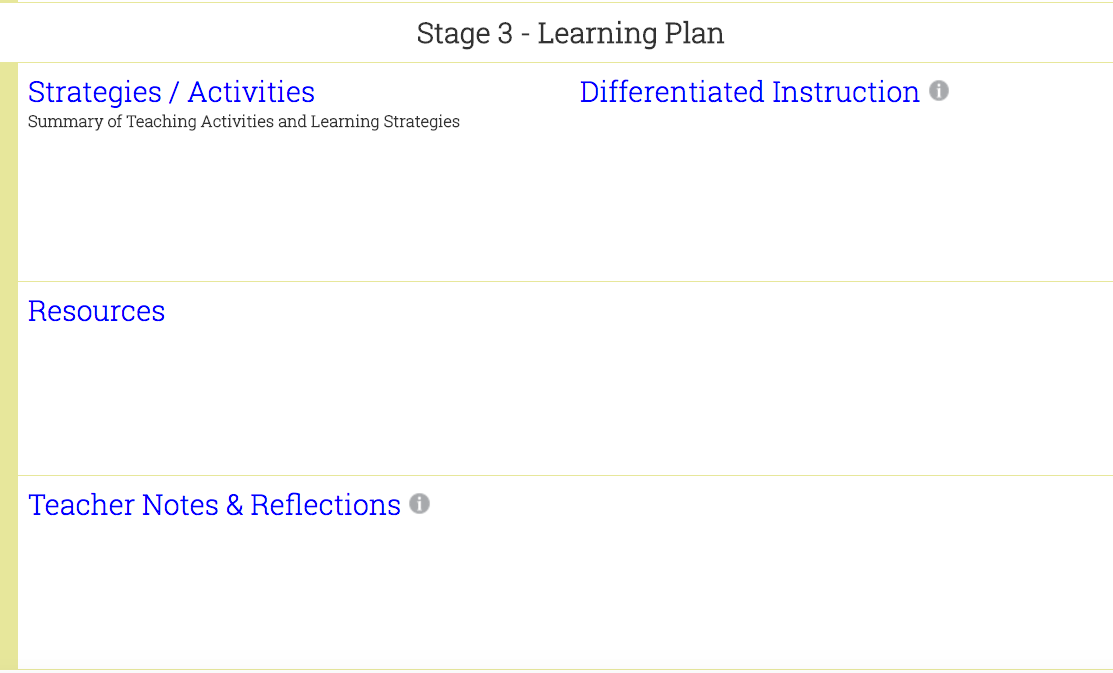
Once the team feels that they have a better understanding of the students’ current learning of the targeted standards, then consider what these results mean to the next unit of study as well as how this unit will be revised for next year. Those reflective notes should be added to the unit documentation as well as the assessment. The ATLAS UbD template is a perfect spot to add strategies for differentiation and notes about the unit.


Screen Shot 2017-09-03 at 11.49.41 AM.png
This is our template for Stage 3 in ATLAS. Some teams also use Google Docs for Stage 3.


Finally, check out Solution Tree’s free resources for tools to help your team work collaboratively and with purpose, information about upcoming webinars, and a video library from the experts in learning.

Have a great week!

Ginny

Happy New School Year!

Students and teachers across the world are beginning a new year. How do I know? My Facebook feed is inundated with Back-to-School pics- and I love it! Here are a few from my feed over the years. Don’t tell my kids!

When our kids would tell us about their first few days of school, it was clear how the year was going to go. The teachers who spent time getting to know their students by building relationships and building routines were more likely to be the teachers that helped our kids feel cared for and feel confident.

It doesn’t need to take a lot of time to begin on the right foot. It can be as simple as standing at the classroom door, shaking each student’s hand, looking them in the eyes, making a quick introduction, and welcoming them to class. The old don’t-smile-until-Christmas advice has never been good for anyone.

Who are your students?

Over the first few weeks of school, the connection you make with students will impact the rest of the year. First impressions work both ways. Tell them about yourself as a student and a learner when you were their age. Better yet, show them a picture of YOU at their age. Here I am at different stages of awkwardness.

Let them know what your dreams were for your future. Where you thought you’d be. How you got where you are now.

Have a laugh, reminisce, then focus on them.

As much as it is a great ice-breaker for them to get to know each other, I recommend that you also get their info on paper (or digitally). Maybe through a discussion post or journal entry on your LMS, or a Google Form, or even a shared Google Doc. This may be the most important data you collect all year.

Focus your questions on these 3 topics (including a few examples):

Your students as people…

  • What is their background?
  • Where is home (especially important to those who are international)?
  • How would their family and friends describe them?
  • What do they need you to know about them?

Your students as learners…

  • What type of teacher do they respect?
  • How do they learn best?
  • How do they ask for help when they need it?

Your students as the future…

  • What are they passionate about?
  • What is happening now in their world that excites them?
  • What is happening now in their world that worries them?

Finally, let’s get back to you.

How are You Modeling Lifelong Learning?

As we get to know our students and they get to know us, we need to think about how we are modeling learning as learners ourselves. We need to build our own learning networks and share, with students, what we are learning as well as how we are using that learning. If we expect students to be learners, we must be learners.

Facebook and Twitter have made this easy. If you teach science and use the NGSS, then there’s a Facebook page for you. If you teach PE, then there are pages for you. If you use Seesaw, then there are pages for you. Honestly, if you teach it, someone is posting about it!

Here is a Google Site that I made last year with links to pages that are worth adding to your learning network. Leave me a comment if you have others that I should add.

My thoughts and energy are with you all this year. It’s going to be GREAT!

Learning Walks Grow Learning

Are Learning Walks part of your school’s culture? What do you look for on a Learning Walk? How can Learning Walks improve every school’s climate?

These were some of the questions asked of our team (several years ago) when Martin Skelton came in and got us “Looking for Learning!” His advice allowed me to step back and notice the learning environment, as well as my routines and daily objectives. Fast-forward a few years and in comes another wise consultant who deepened my understanding of looking for learning through Learning Walks. It was clear that teachers could make small tweaks to what they already do to encourage visiting students, parents, administrators, and the community to see what their students were learning, not just what they were doing.

What Do You Look For on a Learning Walk?

On Learning Walks, you look for learning. What does learning look like? That’s the harder question. There are a few simple ways that I look for learning in our school’s hallways.

  • I look for authentic student work displayed along the corridors.
  • I look for the process of the work, not just the final product. Where did their learning begin and where are they now?
  • I also look for the purpose of the learning (the objective or “I Can” statement).
  • I also look for reflections of the learning, either written by each student or a shared class reflection.

Within the classroom, I look for learning in many different ways. It’s important to first get a feel for each individual classroom’s environment. If each classroom was expected to have the exact same set-up and the exact same routines, then teachers’ creativity and passion would be stifled- we don’t want that. However, if you were a new student and this was your first visit, what would you need to look for to know that you could learn in this room? There are a few simple ways that I look for learning in classrooms.

  • I look for today’s schedule.
  • I look for what we are learning today (and hopefully why and how).
  • I look for instructions of routines (How do kids choose books from the library? What are the steps of the writing process? How do we solve problems? What to do if you’re absent?).
  • I look for varied learning spaces. (Can some students stand or sit on the carpet? Does learning happen in different places in the classroom?).

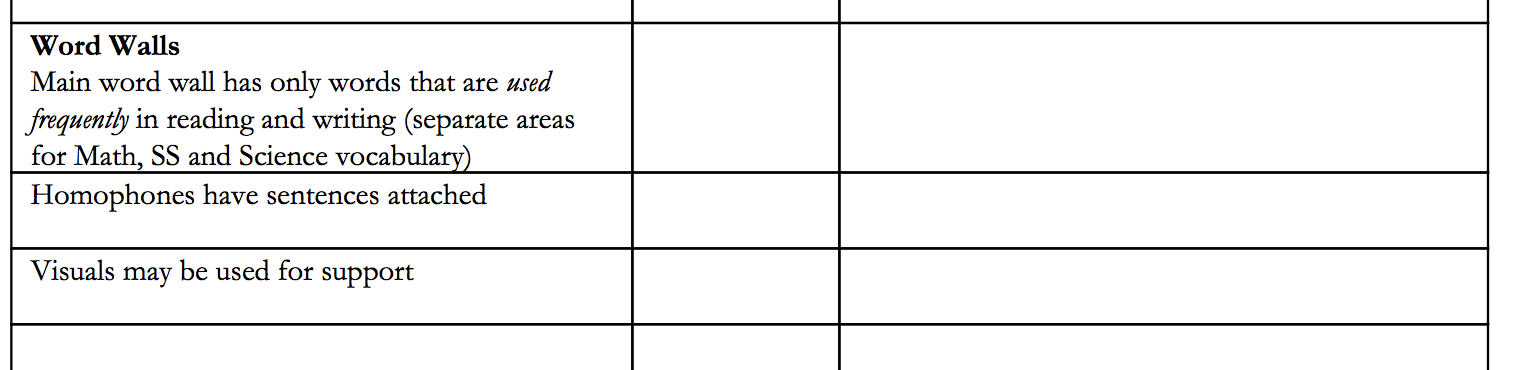
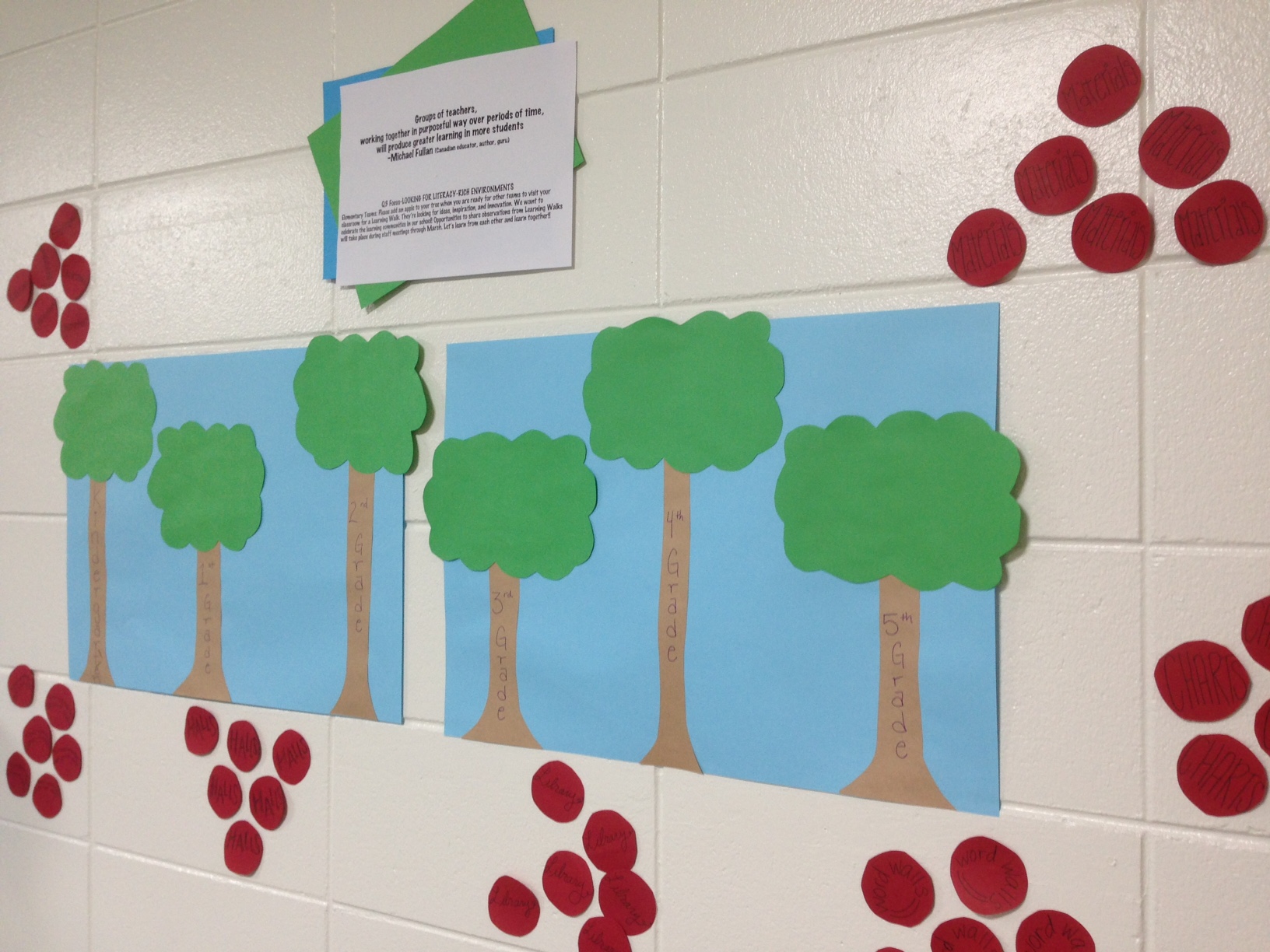
Learning Walks can also be focused on a specific initiative. Emily DeLiddo of languageisliving.com, is a literacy consultant who narrowed my focus of Learning Walks to Literacy-Rich Environments. Emily drafted a Learning Walk that focused on 7 sub-topics: environment, halls, word walls, materials, charts, library, and environmental print. She recommended that we should share the Learning Walk document with teachers, revise it if needed, then chunk the sub-topics into doable actions. Since most of the teachers already had their classrooms set up for the workshop model, we could celebrate the positive documentation of ENVIRONMENTS.

Environ

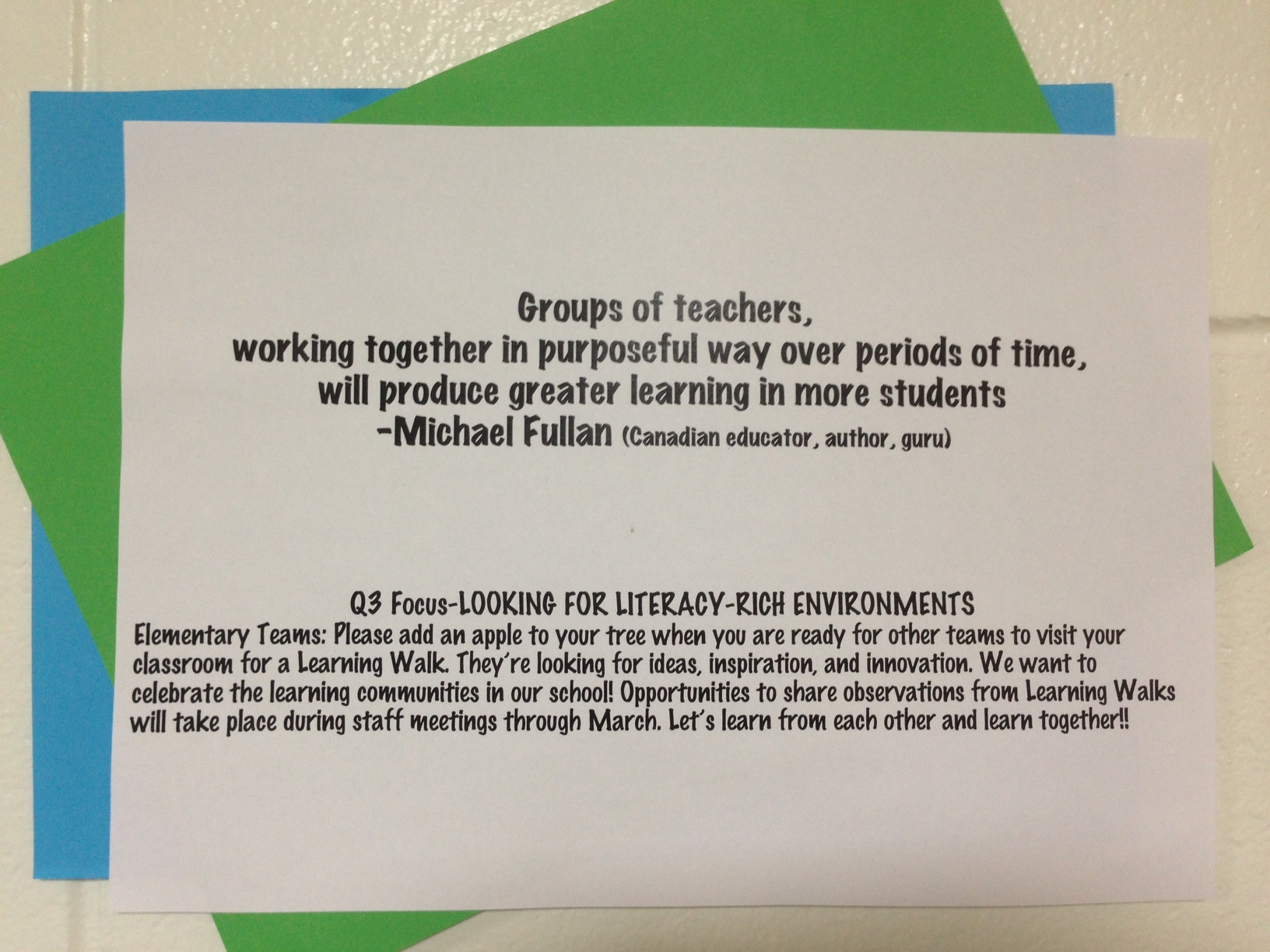
This quarter, our elementary teachers are going to implement Learning Walks as part of their professional learning.

learning walk 3

Teams can decide when they’re ready for other teams to visit their team for a Learning Walk. Hopefully, this will allow teachers to be confident in their work, while also giving praise to colleagues.

learning walk 2

Each grade level has an Apple Tree (I know it’s corny; I can’t help it). They simply stick the apple (possibly the Word Walls apple) to their tree and the other grade levels know that they are ready to show off their Word Walls. Everyone has a different take on Word Walls and how to use them, so teachers can get lots of ideas from their colleagues that may help them learn a different way.

WW

Learning Walk1

Teachers will have a chance to share what they’ve learned from visiting other classrooms during staff meetings. It’s a great chance to take a few minutes from the agenda to celebrate learning.

How Can Learning Walks Improve Every School’s Climate?

Learning Walks, when used as a learning tool and never as an evaluation, will focus the entire staff on learning and feedback. They allow teachers and students to be more comfortable and confident with what is happening in the classroom. When the school community can easily look for learning in the hallways and classrooms, the school becomes a museum of learning and an art gallery of understanding.

Teams with Poor Coaching Don’t Win the Big Game- in learning, every day is the Big Game

Some people work better on their own; I am not one of those people. I like being part of a team. I like everything that being on a team means… building a plan together, stretching together, practicing together, playing together, succeeding together, failing together, reflecting together, and improving together.

As a teacher, I was so blessed to work on some amazing teams of teachers and students. A few that come to mind are the grade 6 team at ACS Beirut (2001-2003)- we were energetic, passionate about learning, and made learning fun! The Dream Team of Seven Springs Middle School (2003-2005)- we took interdisciplinary learning to a whole new level, looping allowed us to really bond, and I worked with master teachers. DEMS (2007-2011)- I found my philosophical twin, and we team taught the heck out of grade 8- always keeping the students’ emotional well-being ahead of everything else!

Sometimes I was being mentored; other times I was the mentor. That’s what teams do- everyone has their strengths and weaknesses, and everyone helps their team improve. No one is better than anyone else. PS- I am including students in my definition of team, so should you.

Being part of a team was what made teaching and learning so meaningful, but here I was, an administrator- with no team. I was lonely.

Then something happened… Something significant… Something that gave me goose bumps. I realized that being an administrator meant taking on the role as the coach of a team. A coach’s job is to inspire as a team, set goals as a team, learn as a team, communicate and model effectively as a team, play-succeed-fail as a team, reflect and improve as a team. Every team needs good coaching or the players are just playing for themselves.

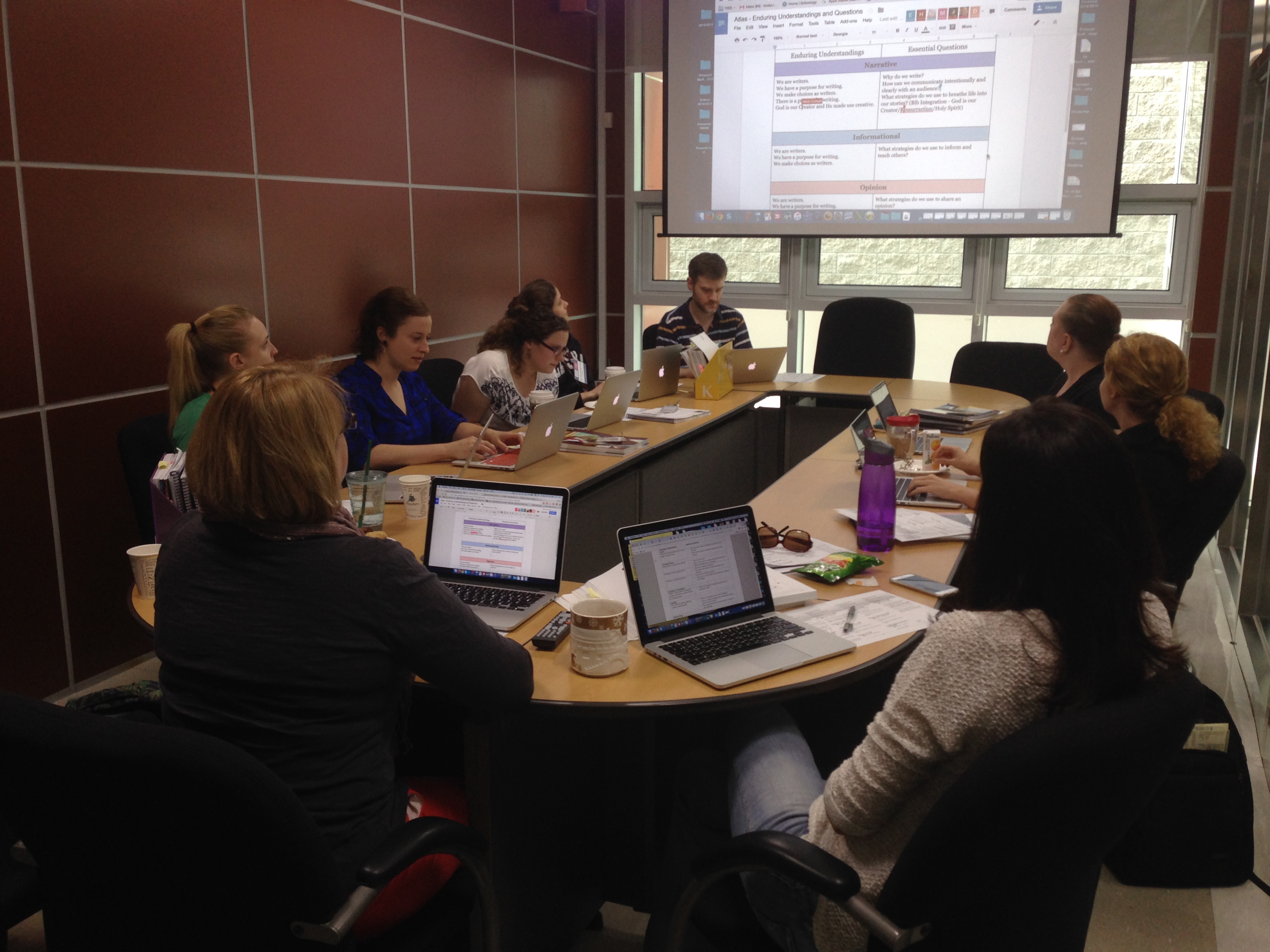
This realization came last week during a professional development day. Grades K-5 team leaders assembled with their principal and me to develop division-wide Enduring Understandings and Essential Questions for the writing units of study. Here is how we worked as an effective (and totally awesome) team:

  • We built a plan together- What are the lifelong learning goals of writing?
  • We stretched our thinking together- What do we already know, and what do we need to know, about the significance of being lifelong writers?
  • We practiced and played together- What work have we done that is meaningful and should be honored?
  • We succeeded together- What are we doing well and is worth continuing?
  • We failed together- What should we stop doing, and why?
  • We reflected together- What did we used to think and what do we now know?
  • We improved together- When can we do this with other subjects? This was powerful!

K-5 Teamwork! Photo credit: Krista Roll

K-5 Teamwork- Succeeding Together! Photo credit: Krista Roll

Think about the inspiring coaches and teammates that you’ve had over the years. If you don’t have that same inspiration and passion to win the Big Game, then make some changes. Your team, whether they are colleagues or students, need a quality coach. Don’t let them down!

Seriously… Kids Really are Counting On You! Inspire them and be a teacher worth remembering.

Imagine that you are a student. It is 6am, you’ve pressed snooze 3 times, and your first thought is of a specific teacher. How does that teacher make you feel?

  1. “I am so excited to go to school! My teacher is always happy to see us, and includes us in planning our units and projects. The time goes by so fast, because we are always moving around and doing interesting things that keep us on our toes and learning in new ways. I feel safe to make mistakes and don’t stress out when we have a test since the tests are fair and allow us to talk about what we learned.” – Sounds like a Master teacher!
  1. “I wonder what today will be like? Sometimes we learn really interesting things and have some fun; we even get to talk about our thoughts and ideas. Other times it seems that we’re all in trouble and don’t know why. Usually we can tell as soon as we walk in and look toward the teacher’s desk. Unfortunately, if it’s a bad day, we are stuck working out of the book and no one’s allowed to talk. It’s not fun to guess what kind of day it will be.” – Oh, boy, that sounds like a moody teacher.
  1. “Ugh, I don’t even want to go to school. All we do is the same thing every week. Read the pages, complete the worksheets, go over the homework, take the test, and repeat for 30 weeks. Sometimes we are lucky enough to get a project, but it’s the same project this class did last year, and the year before that, and the year before that. This teacher must be as bored as their students. I guess I just have to survive the year.” – This is the meh teacher. Most of us have had at least one of these- every year of middle and high school. It’s not you, is it? 

Are you a master? Are you moody? Or, are you… (shoulder shrug goes here) Meh? Trust me, your students see you in one of those categories. Understandably, expecting a master teacher every day may seem unrealistic. We all have a few bad days, but if you are not inspired to be the kind of teacher who inspires kids to have a passion for learning, then please remind me why you are a teacher?

The best part is that you get a chance to be better, every single day! All it takes is an honest conversation with your students. What do they love about your class? What would they like to see changed? Why? How? Students expect feedback to make them better learners. Shouldn’t we expect feedback to make us better teachers?

Be brave, teachers! Kids are counting on us to inspire a passion for lifelong learning. Workbooks and textbooks don’t cover that. Be better than that. Don’t you want to be remembered as a great teacher?

Stay Human, Teachers

As I was packing up and deciding what is worth saving or chucking, I came across some letters that were written to me by former students- 10 years ago. They reminded me of my favorite part of teaching- building relationships with kids. It was easy to teach curriculum when students felt loved, respected, and equal. They were as eager to be passionate about learning, because we were all in it together. We laughed together, cried together, and taught each other- I miss that.

As years have passed, and teachers rely more on technology to get information to students (Let’s face it, technology is pretty cool, and we want to use it!), I am afraid that the valuable relationship that is so necessary between students and teachers is deteriorating. We need to step back, teachers, and examine why and how technology should enhance our relationship with students, not separate us. Technology should be making us better, right?

Virtual classrooms can be amazing! Virtual classrooms can also be confusing, frustrating, and needless. These are the types of questions we must ask ourselves:
1. Is my virtual classroom simple and easy to navigate?
2. Is it aesthetically pleasing and friendly?
3. Is everything that students can see relevant to this unit or current learning?
4. When was the last time a colleague looked at YOUR virtual classroom and helped make suggestions to make it more student-friendly?

I am also concerned about other types of communication between teachers and students, and how technology can take away from our purpose of teaching and further separate us from our students. If students must rely on looking at virtual classrooms to know when assignments or projects are due, understand instructions and expectations, and figure out how they will be assessed- then what are we teaching? This is not the way to support and encourage independent learning. Teachers must guide students to be independent learners by…
– Creating a basic framework- objectives to be learned, purpose, timeline
– Getting student input- project design and process, checklists, rubrics
– Modeling expectations- throughout the process, in class, with your own work/writing
– Giving effective feedback- at each step, personalized, compliment + teaching point
– Opportunity for reflection- of purpose, of their own work (and team), of the process, of learning.

The relationship between teachers and students is so important, and we need to figure out how to keep that personalized relationship while using technology to enhance our classroom. Kids want to be loved, respected, and equal. Let’s not forget that at the end of the day, it’s about them. Not what we’ve taught them, but who they are, who they become. What will the letters from students say about you as a teacher?