
Last June, I retired.
Or something like that.
Looking back now, retirement doesn’t feel like the right word.
Leaving suggests moving away from something. What I experienced this year felt more like a return.
A return to family.
A return to health.
A return to community.
A return to purpose.
A return to myself.
For most of my adult life, I lived overseas, building a career I loved. Schools became my communities. Airports became familiar. Home was wherever we unpacked our boxes and hung our masks in Saudi Arabia, Seoul, Tokyo, or Nairobi.
When I stepped away from school leadership last June, I thought I knew what came next. I was tired. Not the kind of tired that comes from a busy week or a long flight. The kind that settles deep into your bones after years of carrying responsibility, saying yes one more time, and believing that rest could wait until later.
I needed to care for myself. I needed to be near family. I wanted to be available for celebrations, for ordinary Tuesdays, and for the hard moments that never seem to respect a school calendar.
The plan was simple enough. Come back to Colorado. Be closer to the kids. Reconnect with a life that had often been lived from a distance.
But life has a way of editing our plans.
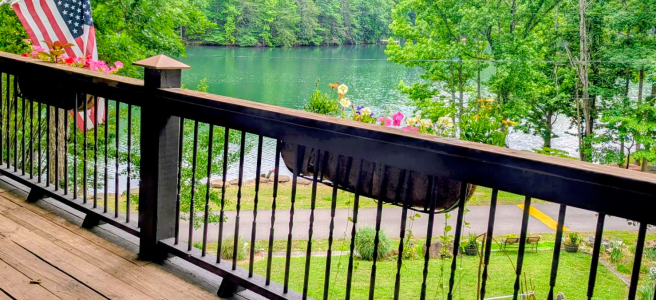
Instead, I felt pulled toward Tennessee. Toward family. Toward a lake house tucked into the Smokies that somehow felt like it was waiting for us.
So we bought a house.
Home, it turns out, was a more complicated idea than I expected.
Saying goodbye to Colorado felt like saying goodbye to a chapter of ourselves. For twelve years, that mountain home had held our family story. There were coffee mornings on the deck watching storms roll across the peaks, hiking boots lined up by the door, music drifting through open windows, and conversations that lingered long after the dishes were done. Friends and family arrived from around the world. Some came for adventure. Some came because they needed a place to land. Somehow, that house always seemed to know how to hold people.
As I wrote in another story, even the air smelled green there.
Leaving was harder than I expected, not because we were losing something, but because we had loved it so well.
At the same time, we moved into the house that had belonged to my father. Our collection of international life felt slightly misplaced in this modern home overlooking a golf course. The masks that looked perfectly at home in Nairobi and Tokyo seemed unsure where they belonged here.
Truthfully, so did I.
My father’s presence still lingers in the quiet corners, the familiar habits of the space, and the deep sighs that homes seem to hold long after the people are gone. It has taken time to understand that this house is becoming ours without ever ceasing to be his.
And yet, this year taught me that home is not always a place.
Sometimes it is people.
Not long after our move, I found myself in Hawaii with a group of women who are family by marriage and friends by choice. We were there to celebrate the graduations of girls I’ve watched grow up and love as my own nieces. Their mothers are like sisters to me. Their grandmother is my aunt, though that word has never felt large enough. She is a confidant, a friend, and one of the few people who can make me laugh until I cry and cry until I laugh.
While everyone else hiked, explored, and zip-lined, she and I spent much of the week in our pajamas, healing from our own ailments and simply being together. It turns out that some of life’s best adventures happen in quiet conversations.
The year continued with celebrations. A niece’s wedding. Graduations and engagements. The birth of our first great-nephew, with more babies soon to arrive. We welcomed our daughter home through a season of sadness and loss and then hugged her goodbye as she stepped into her next adventure in Costa Rica.
After years of living oceans away, these were the moments I came home for.
For the first time in decades, I spent Thanksgiving at home. Not home as a destination, but home as a place. Surrounded by family, friends, and familiar voices.
I didn’t realize how much I had missed that.
One of the reasons I stepped away from school life was health.
I needed to learn who I was outside of my work.
Deep rest became its own kind of medicine. Slow mornings. Afternoon naps. Unhurried days. The release of stress I had carried for years without realizing its weight.
I found doctors who listened. I began to understand what was happening inside my body and what it might need from me.
And then I discovered something else.
Therapy.
For years, I assumed I didn’t need it.
I was wrong.
There is something humbling about sitting with another person and allowing yourself to be fully honest. It has changed how I see myself, how I respond to challenges, and how I move through the world. I am still learning.
The house in Tennessee has become part of that learning, too.
An old house has a way of teaching patience. Every switch, every creak, every unexpected repair seems to arrive with a lesson attached. Some days those lessons are easier to appreciate than others.
Little by little, we are learning to love this place. Not by filling it with new things, but by giving old things another life. A chest of drawers that belonged to my grandmother and then my mother. A washstand rescued from a local thrift shop. Pieces with stories. Pieces that remind us that value often comes from what has endured.
This year also brought me home in a different way.
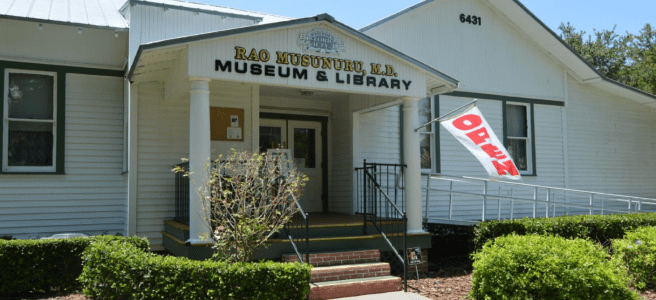
Volunteering at the historical museum in downtown New Port Richey reminded me that I have roots.
For years, I proudly described myself as belonging to the world. And I do.
But I have come to realize that I also belong to the place that raised me.
There is something powerful about preserving stories that might otherwise be lost. About hearing from people whose grandparents walked the same streets as yours. About helping a community remember itself. Through the museum, I found myself returning not only to a place, but to a part of myself.
I also discovered something else during this first year away from school leadership.
I am apparently incapable of not serving.
I tried.
It didn’t take.
Teaching graduate students who aspire to become educational leaders has been unexpectedly nourishing. Their questions, hopes, and growth remind me why I entered education in the first place. The historical society gives me a place to contribute. Teaching gives me a place to mentor. Both remind me that purpose doesn’t disappear simply because a career chapter ends.
I may have retired from a position.
I have not retired from purpose.
Perhaps that is what this first year has taught me.
Retirement was never really about stopping.
It was about returning.
Returning to family.
Returning to health.
Returning to community.
Returning to purpose.
Returning to the parts of myself that had been waiting patiently beneath the busyness of a life well lived.
A year ago, I thought I was leaving a life behind.
Now I see that I was being invited back.
Back to the people I love.
Back to the places that formed me.
Back to meaningful work.
Back to myself.
And for the first time in a very long time, that feels exactly right.