The Year of Returning (or Something Like That)

Last June, I retired.

Or something like that.

Looking back now, retirement doesn’t feel like the right word.

Leaving suggests moving away from something. What I experienced this year felt more like a return.

A return to family.

A return to health.

A return to community.

A return to purpose.

A return to myself.

For most of my adult life, I lived overseas, building a career I loved. Schools became my communities. Airports became familiar. Home was wherever we unpacked our boxes and hung our masks in Saudi Arabia, Seoul, Tokyo, or Nairobi.

When I stepped away from school leadership last June, I thought I knew what came next. I was tired. Not the kind of tired that comes from a busy week or a long flight. The kind that settles deep into your bones after years of carrying responsibility, saying yes one more time, and believing that rest could wait until later.

I needed to care for myself. I needed to be near family. I wanted to be available for celebrations, for ordinary Tuesdays, and for the hard moments that never seem to respect a school calendar.

The plan was simple enough. Come back to Colorado. Be closer to the kids. Reconnect with a life that had often been lived from a distance.

But life has a way of editing our plans.

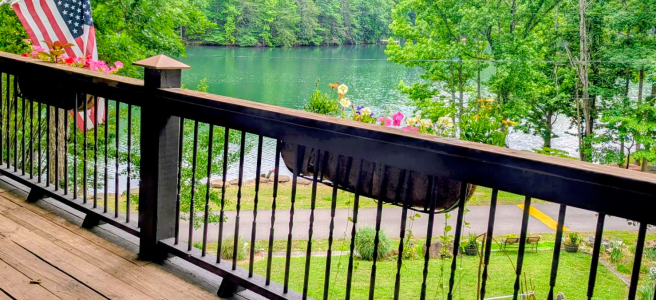
Instead, I felt pulled toward Tennessee. Toward family. Toward a lake house tucked into the Smokies that somehow felt like it was waiting for us.

So we bought a house.

Home, it turns out, was a more complicated idea than I expected.

Saying goodbye to Colorado felt like saying goodbye to a chapter of ourselves. For twelve years, that mountain home had held our family story. There were coffee mornings on the deck watching storms roll across the peaks, hiking boots lined up by the door, music drifting through open windows, and conversations that lingered long after the dishes were done. Friends and family arrived from around the world. Some came for adventure. Some came because they needed a place to land. Somehow, that house always seemed to know how to hold people.

As I wrote in another story, even the air smelled green there.

Leaving was harder than I expected, not because we were losing something, but because we had loved it so well.

At the same time, we moved into the house that had belonged to my father. Our collection of international life felt slightly misplaced in this modern home overlooking a golf course. The masks that looked perfectly at home in Nairobi and Tokyo seemed unsure where they belonged here.

Truthfully, so did I.

My father’s presence still lingers in the quiet corners, the familiar habits of the space, and the deep sighs that homes seem to hold long after the people are gone. It has taken time to understand that this house is becoming ours without ever ceasing to be his.

And yet, this year taught me that home is not always a place.

Sometimes it is people.

Not long after our move, I found myself in Hawaii with a group of women who are family by marriage and friends by choice. We were there to celebrate the graduations of girls I’ve watched grow up and love as my own nieces. Their mothers are like sisters to me. Their grandmother is my aunt, though that word has never felt large enough. She is a confidant, a friend, and one of the few people who can make me laugh until I cry and cry until I laugh.

While everyone else hiked, explored, and zip-lined, she and I spent much of the week in our pajamas, healing from our own ailments and simply being together. It turns out that some of life’s best adventures happen in quiet conversations.

The year continued with celebrations. A niece’s wedding. Graduations and engagements. The birth of our first great-nephew, with more babies soon to arrive. We welcomed our daughter home through a season of sadness and loss and then hugged her goodbye as she stepped into her next adventure in Costa Rica.

After years of living oceans away, these were the moments I came home for.

For the first time in decades, I spent Thanksgiving at home. Not home as a destination, but home as a place. Surrounded by family, friends, and familiar voices.

I didn’t realize how much I had missed that.

One of the reasons I stepped away from school life was health.

I needed to learn who I was outside of my work.

Deep rest became its own kind of medicine. Slow mornings. Afternoon naps. Unhurried days. The release of stress I had carried for years without realizing its weight.

I found doctors who listened. I began to understand what was happening inside my body and what it might need from me.

And then I discovered something else.

Therapy.

For years, I assumed I didn’t need it.

I was wrong.

There is something humbling about sitting with another person and allowing yourself to be fully honest. It has changed how I see myself, how I respond to challenges, and how I move through the world. I am still learning.

The house in Tennessee has become part of that learning, too.

An old house has a way of teaching patience. Every switch, every creak, every unexpected repair seems to arrive with a lesson attached. Some days those lessons are easier to appreciate than others.

Little by little, we are learning to love this place. Not by filling it with new things, but by giving old things another life. A chest of drawers that belonged to my grandmother and then my mother. A washstand rescued from a local thrift shop. Pieces with stories. Pieces that remind us that value often comes from what has endured.

This year also brought me home in a different way.

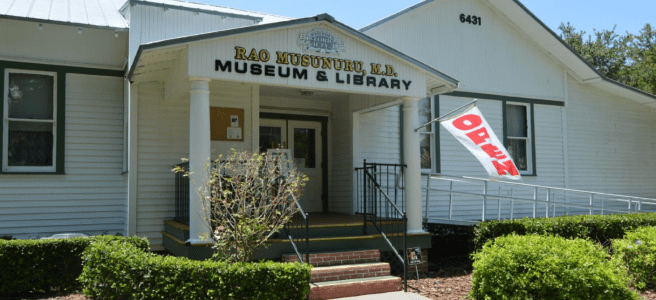
Volunteering at the historical museum in downtown New Port Richey reminded me that I have roots.

For years, I proudly described myself as belonging to the world. And I do.

But I have come to realize that I also belong to the place that raised me.

There is something powerful about preserving stories that might otherwise be lost. About hearing from people whose grandparents walked the same streets as yours. About helping a community remember itself. Through the museum, I found myself returning not only to a place, but to a part of myself.

I also discovered something else during this first year away from school leadership.

I am apparently incapable of not serving.

I tried.

It didn’t take.

Teaching graduate students who aspire to become educational leaders has been unexpectedly nourishing. Their questions, hopes, and growth remind me why I entered education in the first place. The historical society gives me a place to contribute. Teaching gives me a place to mentor. Both remind me that purpose doesn’t disappear simply because a career chapter ends.

I may have retired from a position.

I have not retired from purpose.

Perhaps that is what this first year has taught me.

Retirement was never really about stopping.

It was about returning.

Returning to family.

Returning to health.

Returning to community.

Returning to purpose.

Returning to the parts of myself that had been waiting patiently beneath the busyness of a life well lived.

A year ago, I thought I was leaving a life behind.

Now I see that I was being invited back.

Back to the people I love.

Back to the places that formed me.

Back to meaningful work.

Back to myself.

And for the first time in a very long time, that feels exactly right.
Borrowed Soil

I do not think we name the generosity of international life often enough.

You arrive, and somehow there is a place for you. Work. Community. Friendships that form faster than you would expect. Purpose that feels immediate. You are allowed to grow. And at the same time, there is an unspoken understanding you learn to live with. This soil is borrowed.

For more than two decades, my life unfolded far from where I was born and raised. I built a meaningful life, not in one place but many. I became an educator, a leader, a partner, a parent. I put down roots that mattered, even as those roots learned how to lift.

Living abroad teaches you to adapt quickly and belong efficiently. You connect deeply while knowing permanence is not part of the deal. You build systems and relationships you care about, fully aware that one day you will dismantle what you built, pack up what you can, and leave the rest behind for someone else to steward. It is simply the agreement. You may grow here, but not forever.

And then, sometimes quietly, you return.

I have been back in my sweet hometown, New Port Richey, Florida… and recently started volunteering at the West Pasco Historical Society’s museum. The museum is housed in a schoolhouse built in early 1915. The floors creak when you walk, the good kind, the kind that lets you know you are not the first person to stand there. After a career spent in schools all over the world, I find myself back in one again. Smaller. Older. Much quieter.

On the surface, the work is modest. A few hours a week. Learning procedures. Researching. Asking where things go. I am new enough that I carry that polite uncertainty of someone trying to be helpful without getting in the way. Which, if we are being honest, is not my strongest skill set.

This week, a 103-year-old World War II veteran came in with his family.

They had flown south from Washington, D.C., escaping winter. This was not his hometown. His daughter told his story for him. He listened as she spoke, and he smiled. A big, gorgeous smile. He met my eyes in a way that made it clear he knew exactly where he was and exactly what was being said.

He listened.

I went back to greeting other visitors, the floor creaking under my steps, and kept thinking about that smile. In a museum full of local history, his presence reminded me that some stories stay, some travel, and some do both.

Volunteering has surprised me. Being in service has always been central to who I am, but for much of my career it came with titles, visibility, and outcomes. Service was easy to explain. This is different.

At the museum, no one is interested in my resume. I am being trained. Corrected kindly. After years of leading complex systems, I find myself genuinely content learning how to label things correctly and put them back where they belong.

It turns out I am perfectly happy being useful without being impressive.

There is something clarifying about that.

I am noticing how much identity lives in simply showing up. In listening. In contributing quietly to something that existed long before me and will continue without me. It is humbling in the best way. It is also, unexpectedly, a relief.

And it has me wondering, not urgently but honestly: who am I when I am not arriving or leaving? What does leadership look like when no one is watching or asking for it? What parts of me were shaped right here that I have been carrying across continents without realizing it?

Borrowed soil gave me so much. I am grateful for every place that allowed me to grow and learn. But there is something steady about standing where your story began and asking a simpler question.

How can I serve here?

Most days, the answer looks small. Opening the door. Greeting a visitor. Listening to a story. Walking across a creaky wooden floor in a schoolhouse that has seen far more than I ever will.

For now, that feels like enough.

I am showing up.
I am listening.
And I am letting the roots do what they are ready to do.

Dig deeper.

Author’s note:
If The Year I Stopped Trying to Be Impressive was about stepping away from titles and expectations, Borrowed Soil is about what I am stepping toward. Volunteering, listening, and returning to the place where my story began have helped me notice how identity shifts when achievement is no longer the measure. This reflection feels like the next honest chapter.

The Year I Stopped Trying to Be Impressive

For a long time, I thought good leadership meant being impressive.

Not flashy- impressive. Not keynote- impressive. But quietly, consistently impressive… the kind where you smile, nod, and say, “Of course,” even when your inner voice is whispering, Please don’t ask me to do one more thing.

I was raised to suck it up. To be agreeable. To smile no matter what. To respond with a cheerful “I’ll be glad to,” even when what I really meant was, I need a nap and a boundary. Over time, that reflex became so automatic that I stopped noticing how much energy it took… until, slowly, I did notice. And once I noticed, I couldn’t unsee it.

This year, I stopped trying to be impressive.

There’s a version of “fake it till you make it” that serves us well early on. It gives us courage. It helps us walk into rooms we’re not quite ready for yet. But there’s another version, too, the quieter, more exhausting one. The one that feels less like growing confidence and more like putting on a costume. I’ve said more than once that it began to feel like I was performing my own competence. Saying the right things. Holding the right posture. Playing the part of someone who always had it together.

That kind of acting is surprisingly draining.

Letting go of that performance has been unexpectedly freeing. I no longer feel the need to arrive as the expert with answers neatly tucked away. Instead, I show up as a thinking partner. A listener. Someone willing to say, “I don’t know yet; let’s talk it through.” And something interesting happens when you do that: other people stop performing, too.

The longer I’ve worked in education, the more I’ve learned that what people often need isn’t a solution… it’s space. Space to think out loud. Space to name what’s heavy. Space to admit they’re tired without being met with a to-do list. More recently, I’ve noticed how powerful it is to replace certainty with curiosity, and how much trust lives in a simple, honest pause.

Admitting that I’m tired has been part of this shift. Educators are remarkably good at pushing through, and many of us were taught, explicitly or not, that fatigue was something to hide or apologize for. This year, I’ve been practicing telling the truth. “I’m tired.” “That feels like too much right now.” “I need to think before I say yes.” The world, it turns out, does not fall apart when you do this. What happens instead is a softening. A quiet relief in no longer pretending I have endless capacity.

Stepping away from the need to be impressive hasn’t meant stepping away from care, commitment, or purpose. If anything, it’s clarified them. I’m far more interested in presence than polish now… less “watch me lead” and more “let’s walk this together.” Modeling wholeness, rather than perfection, feels like the most responsible kind of leadership I can offer.

This wasn’t a bold declaration or a neatly packaged New Year’s resolution. It was smaller than that. A series of gentle permissions: to pause before responding, to say no without a smiley face, to be kind and boundaried. In a culture that often rewards busyness and performative competence, it feels like a quiet rebellion… and one I’m willing to keep practicing.

I don’t know exactly what this year will bring, and I’m surprisingly okay with that. I’m no longer interested in being impressive. I’m interested in being honest, present, and real… especially with those I’m lucky enough to walk alongside.

And that… feels like more than enough.

A, E, I… oh, Q!

When I was in elementary school, I was tested to see if my IQ was high enough to be considered for the Gifted Program. I think I was singled out as a potential genius more for my EQ than for my IQ. I wasn’t super smart or anything, but I knew how to figure things out, how to read people, and how to please teachers.

This has remained true throughout my personal and professional life. I’m never the smartest person in the room, but my EQ reminds me that I’m okay with that. I appreciate learning from and with others. I love to laugh while working hard. I care about others and am curious about their superpowers.

In COVID times, a different type of quotient has emerged from the EQ bucket and has begun to grow legs, the Adaptability Quotient (AQ). 

Our world has become more complex, more uncertain, and more ambiguous. Each day it seems we are navigating relationships and responding to situations that feel different than ever before. 

According to Amy Edmondson, a professor of leadership and management at Harvard Business School, your IQ might help you get through exams to become qualified in your chosen field of work; your EQ might help you connect with your interviewer, get the job, and build relationships with coworkers and clients; but it’s your AQ that will ensure you can keep up with innovations and new ways to work in an everchanging future.

The Creative Thinking Institute

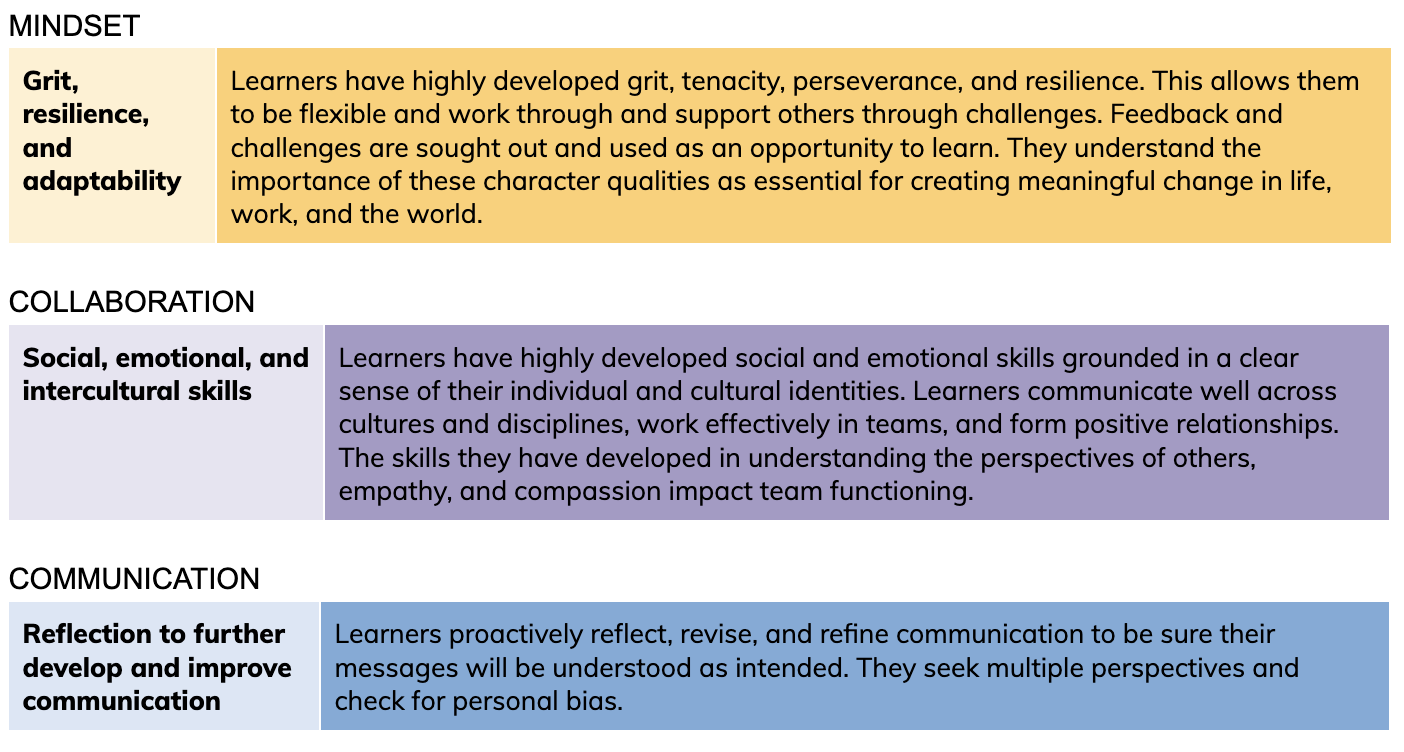
I believe these are skills that can be honed and grown, no matter your age or stage. In fact, the 6Cs from New Pedagogies for Deep Learning use progressions that help users better understand where they are in those specific competencies and what it looks like as they keep growing their AQ. 

Below, I have included just a few of the competencies where I see what having a high Adaptability Quotient (AQ) looks like. 

from the 6Cs Learning Progressions by NPDL

What can we do?

As educators, we need to help students not only build their AQ muscles, but we need to be explicit about what it looks like when they are being adaptable, when they aren’t showing the skills of being adaptable, and why this will help them throughout life.

Of course, we first have to start with ourselves. Take a look at the competencies above. Which of these do you feel confident in? Which do you see room for growth? How might you consider a goal to work towards? Who could join you as an accountability partner? Maybe a class?

Self-Awareness and Self-Reflection

Under the Communication competency, I am committed to checking for personal bias. I know that this is an area of growth for me. In fact, in a recent meeting, I recognized that my own biases might be interfering with my ability to make a specific decision and asked for a barometer check to ensure that my decision-making was fair and accurate. 

Hey! Will you look at that?!

I used my IQ to remind me that I might be wrong. I used my EQ to humbly recognize that my thinking might be biased. I used my AQ to remain open and curious about other perspectives.

Maybe I AM Gifted after all!