The Longest Summer Ever: My first attempt at retirement

I keep telling people I’m “retired,” but honestly? It still feels exactly like summer break. Just… longer. As in, the longest summer ever.

You’d think after decades in education, my body would know the difference between “July freedom” and “you actually don’t have to go back in August.”
But no.
Every morning I wake up expecting that telltale flutter in my chest… the quiet mental checklist of meetings, walkthroughs, agendas, and responsibilities.

Instead, nothing. Just the soft, strange realization:
Oh. Right. This is my first attempt at retirement.

My Endless Summer?!

Summer That Never Ends

Let me be clear: I’m not complaining.
There are parts of this “forever summer” that I am embracing with full, unapologetic enthusiasm:

  • No alarm clock.
  • No makeup.
  • No “professional clothes” (whatever those were… I’ve fully forgotten).
  • An alarming number of weekday PJ days… a freedom I never knew I needed.

But there’s also this odd internal clock that refuses to reset.
After a lifetime of school-year cycles, my brain keeps insisting,
Any day now… we go back.

Except we don’t.
Not this time.

My Secret: I Haven’t Really Left School

Which brings me to my confession:
I cannot stay off LinkedIn.

I scroll through it like a retired detective scrolling old case files, muttering, “Ah, yes, I remember that initiative…”

I feel like a Peeping Tom in the international-school community, quietly watching from the bushes while everyone shares learning highlights, leadership reflections, new jobs, updated titles, conference photos, PD takeaways, mentoring moments.

Everyone else is in the proverbial “staff room,” buzzing with the energy of a new academic year.
And I’m standing outside the window like,
“Oh wow, look at that inquiry-based learning celebration! Good for them!”

I’m not in it anymore, but goodness, I still love it. And I can’t seem to walk away from it completely, or even partially.
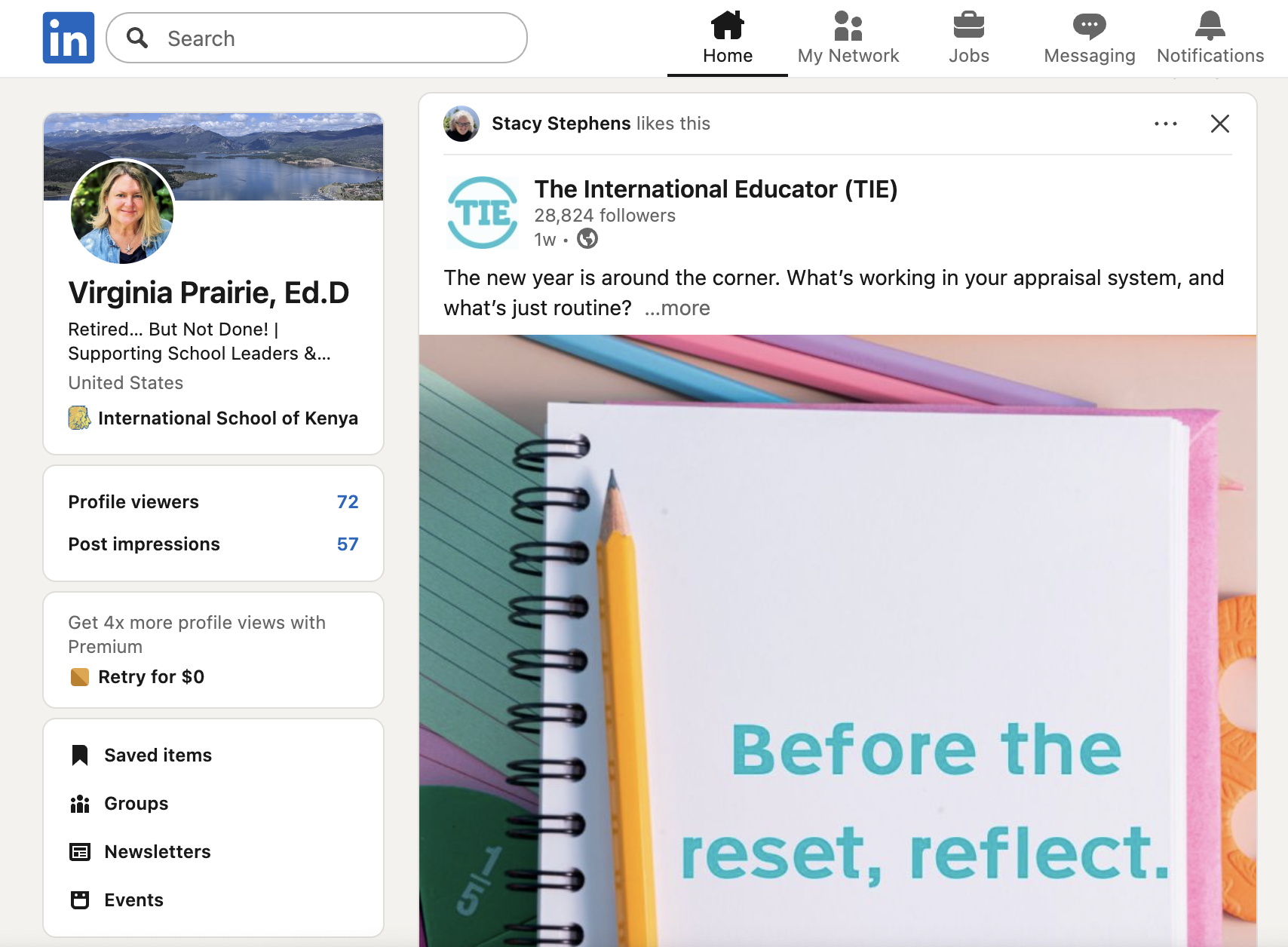
Where would I be without #tieonline?

Lost-ish, but Fine-ish

So how’s retirement going?
Honestly: a mixed bag.

Some days, I feel unmoored, like I left the dock but forgot to bring the paddles.
There’s no calendar telling me where to be, what to do, or who needs me.

And as silly as it sounds, that can feel a little… lonely.
Or aimless.
Or like I’m waiting for school to start again after a really, really long July.

But then there are the other days… the ones when I think,
“Oh wow, this is actually lovely.”
When the coffee tastes better than it ever did at 6:00 a.m.
When the day unfurls slowly.
When I remember that the whole point of this “longest summer ever” is to rest, reset, rethink.

And, maybe most importantly, to just be.
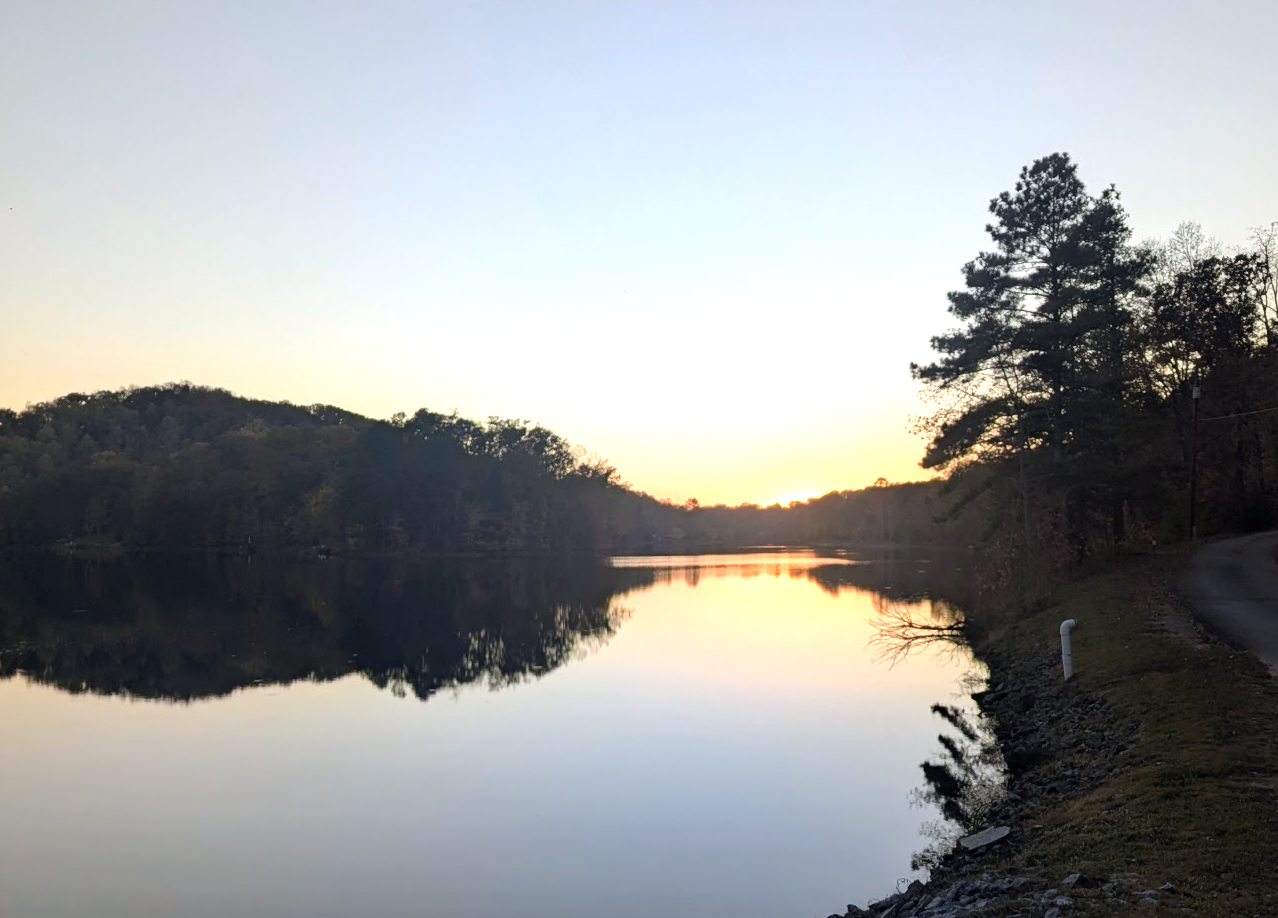
Laurel Lake (TN) sunset walk

Retirement or Rewirement?

Part of me wonders whether I’m even doing retirement right.
Is it supposed to feel like this?
Is there a handbook? (And if so, does it come with rubrics?)

But maybe this is what a first attempt is supposed to be:
a gentle, sometimes awkward experiment in re-learning yourself outside of job titles and school-year rhythms.

Maybe this “longest summer ever” is the season I needed without ever knowing it –
a season to soften, slow down, and wander a little.
A season to unlearn urgency.
To rethink purpose.
To rediscover curiosity without having to turn it into a workshop, slide deck, or strategic plan.


For Now, I’m Letting Summer Last

I don’t know what comes next.
I don’t even know how long this first attempt at retirement will last.
Knowing me, I might press “rewind” and jump back into something new before long.

But for now?
I’m living inside the longest summer ever… pajamas, coffee, LinkedIn lurking, and all.

And maybe that’s not just okay.
Maybe it’s exactly right.
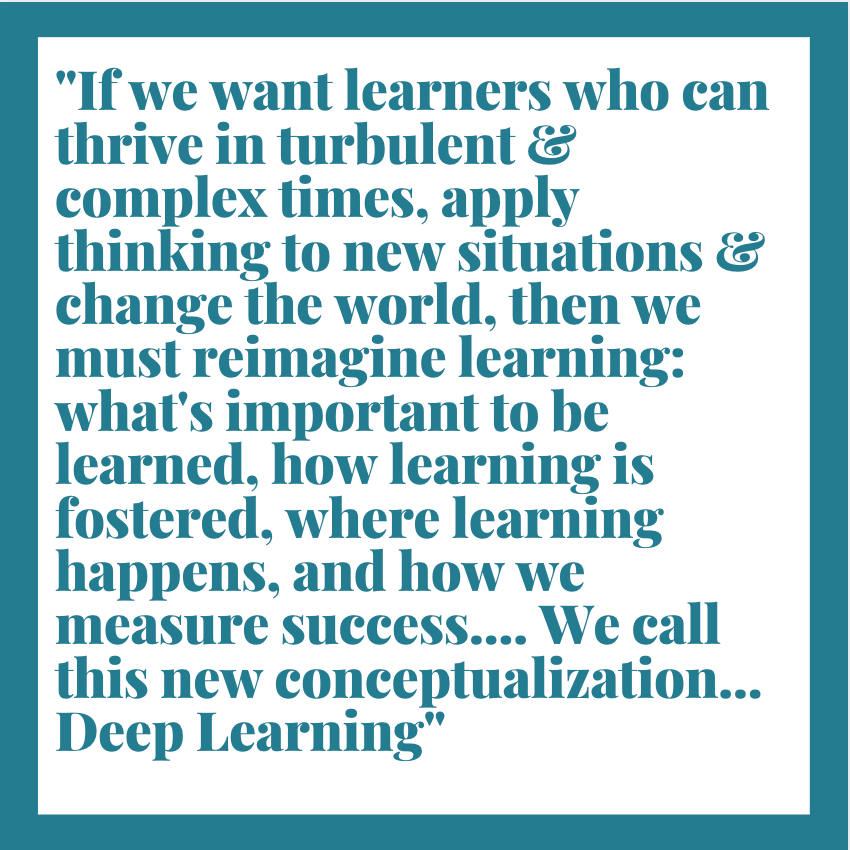
A new mantra: Assess what we value

Just this week I was part of a global meeting about assessing and reporting deep learning.

Eight educators and two consultants located in and across North America, Japan, New Zealand, and Australia zoomed in to share ideas, current work, and ask questions about how we might collect evidence of global competencies in assessments, share growth of these competencies on the report card, and maybe even showcase them on the transcript (above academic performance- would be my dream!).

Global Competencies: New Pedagogies from Deep Learning

A wise member of this group said something that I just can’t get off my mind…

How might we help teachers better understand how to assess what we value rather than value what we assess?

At that moment, it was like a flood of excitement and questions and ideas rushed through my mind and my heart.

How is this the first time I have heard this phrase?

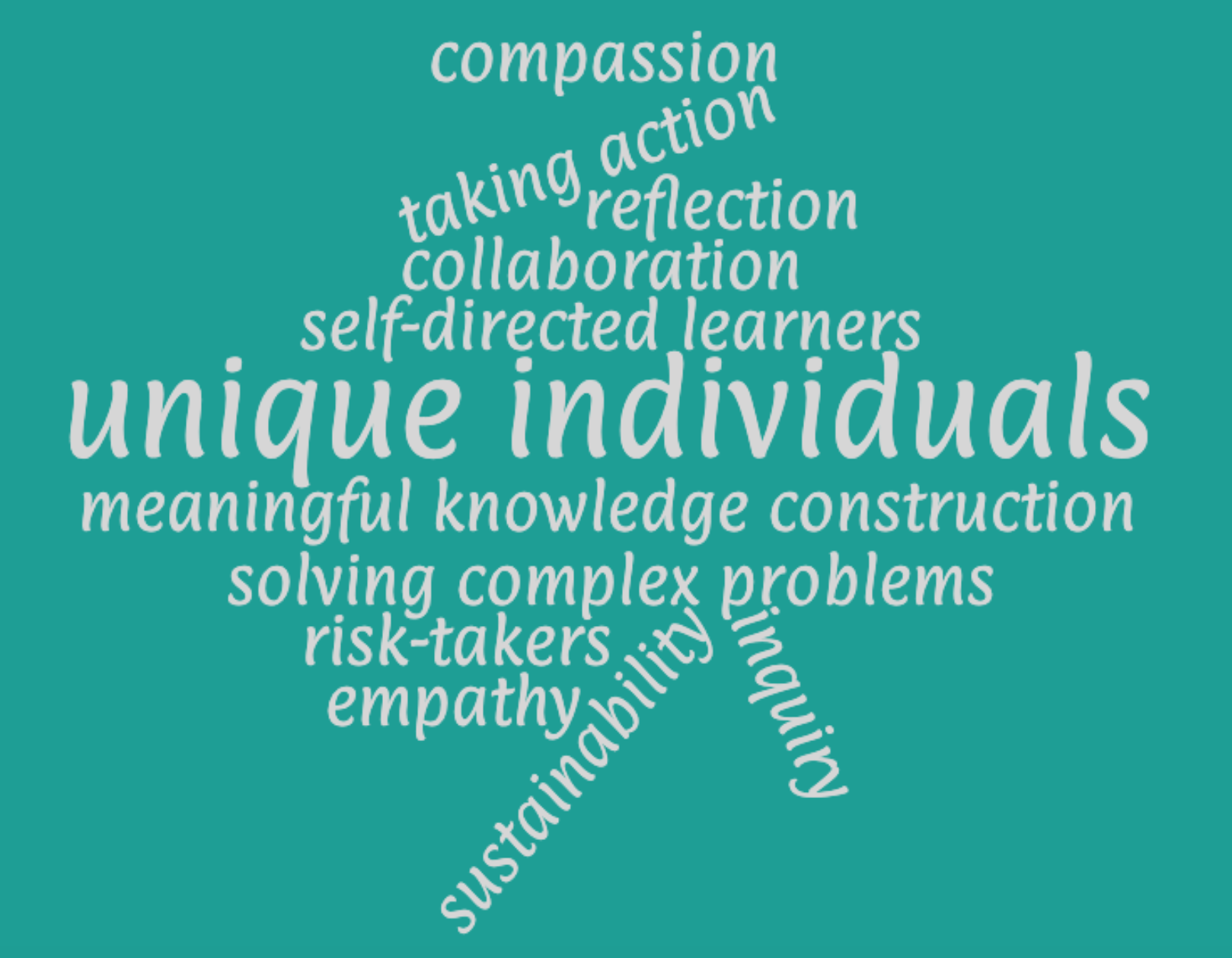
I immediately looked at our school’s mission and vision. What DOES our school value? The school where I work values students as unique individuals, self-directed learners, risk-takers, empathy, compassion, human and environmental sustainability, solving complex problems, collaboration, inquiry, meaningful knowledge construction, reflection, taking action, and so much more.

Would students look at our assessments and know what we value as a school or do our assessments look like we value

  • the right answer,
  • low-level knowledge and understanding, and
  • maybe even secrets (as in- we were tested on something that we weren’t taught!)?

Do our assessments tell students what really matters?  

If we want self-directed learners, but only assess them through more traditional means, why should they believe what their school values? Students might be hearing one thing but seeing another. They will play the game of the holder of their grade, not the vision of the school.

Consider Student Voice and Choice

One example of how to show students that we value self-directed learning could be the opportunity for students to choose how they should be assessed on the targeted outcomes. Ask them for ideas. Some might choose a portfolio of various evidence and reflection, some might choose to create a gameshow, some might choose an infographic, or maybe a TedTalk. As long as they can show valid evidence of their proficiency toward the outcomes, doesn’t this show them that we value their ideas, their creativity, their voice, and the application of their learning?

The Real World

All we have to do is look at the real-world examples we view or read every day.

I can’t think of any multiple-choice/matching/fill-in-the-blank questions embedded in news articles or documentaries. I see lots of graphs, charts, infographics, rich text, and interviews.

How can we use newspapers, websites, newscasts, webinars, documentaries, and social media as models of authentic assessments?

But, But, But…

Shouldn’t we prepare students for the traditional assessments they might see later… like AP exams, SATs, university?

Sure, as formative assessments to inform what might need time for reteaching, individual differentiation, or going deeper based on interest. Keep these short, used at the beginning or end of class- depending on your needs, and definitely not high-stakes (no-stakes would be awesome!).

Sources

Fullan, M., Quinn, J. and McEachen, J., 2018. Deep learning. Thousand Oaks, Calif: Corwin.

Quinn, J., McEachen, J., Fullan, M., Gardner, M. and Drummy, M., 2020. Dive into deep learning: Tools for engagement. Thousand Oaks, CA: Corwin.