

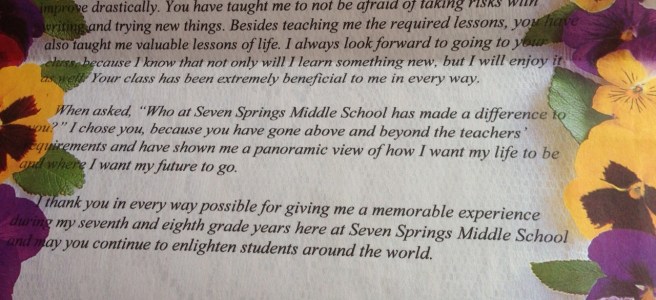
As I was packing up and deciding what is worth saving or chucking, I came across some letters that were written to me by former students- 10 years ago. They reminded me of my favorite part of teaching- building relationships with kids. It was easy to teach curriculum when students felt loved, respected, and equal. They were as eager to be passionate about learning, because we were all in it together. We laughed together, cried together, and taught each other- I miss that.
As years have passed, and teachers rely more on technology to get information to students (Let’s face it, technology is pretty cool, and we want to use it!), I am afraid that the valuable relationship that is so necessary between students and teachers is deteriorating. We need to step back, teachers, and examine why and how technology should enhance our relationship with students, not separate us. Technology should be making us better, right?
Virtual classrooms can be amazing! Virtual classrooms can also be confusing, frustrating, and needless. These are the types of questions we must ask ourselves:
1. Is my virtual classroom simple and easy to navigate?
2. Is it aesthetically pleasing and friendly?
3. Is everything that students can see relevant to this unit or current learning?
4. When was the last time a colleague looked at YOUR virtual classroom and helped make suggestions to make it more student-friendly?
I am also concerned about other types of communication between teachers and students, and how technology can take away from our purpose of teaching and further separate us from our students. If students must rely on looking at virtual classrooms to know when assignments or projects are due, understand instructions and expectations, and figure out how they will be assessed- then what are we teaching? This is not the way to support and encourage independent learning. Teachers must guide students to be independent learners by…
– Creating a basic framework- objectives to be learned, purpose, timeline
– Getting student input- project design and process, checklists, rubrics
– Modeling expectations- throughout the process, in class, with your own work/writing
– Giving effective feedback- at each step, personalized, compliment + teaching point
– Opportunity for reflection- of purpose, of their own work (and team), of the process, of learning.
The relationship between teachers and students is so important, and we need to figure out how to keep that personalized relationship while using technology to enhance our classroom. Kids want to be loved, respected, and equal. Let’s not forget that at the end of the day, it’s about them. Not what we’ve taught them, but who they are, who they become. What will the letters from students say about you as a teacher?
 prairielearning